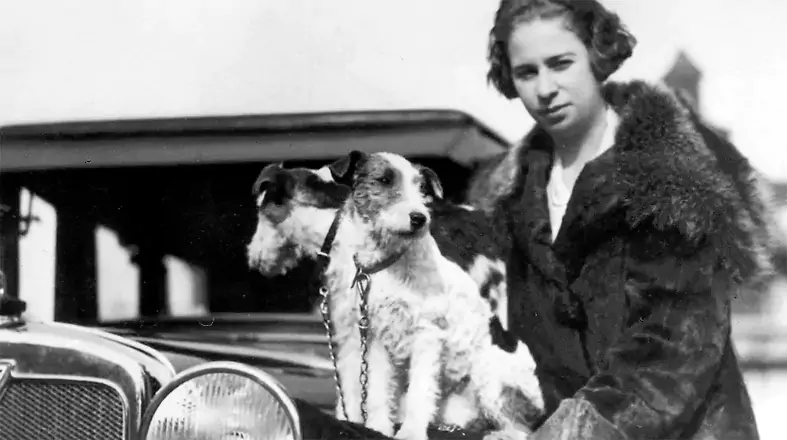
These 5 Women Defied a Male-Dominated Industry and Changed Cars Forever
The automotive world has long been considered a male-dominated industry. Names like Gottlieb Daimler, Carl Benz, and Henry Ford are widely known and often associated with the birth and development of the automobile.
However, behind the scenes—and sometimes against strong resistance—several pioneering women also played a crucial role in shaping automotive history.
From inventing car heaters and windshield wipers to completing the first global car journey, these remarkable women left a lasting mark on the automotive industry.
Here are five women whose contributions helped shape modern driving.
1. Margaret A. Wilcox (1838–1912)
Margaret A. Wilcox grew up in Chicago, where she developed an early interest in technology. She later became one of the first female mechanical engineers in the United States.
Her first invention was a combined washing machine and dishwasher, although the patent was filed under her husband’s name because women were not allowed to file patents at the time.
Later, Wilcox patented one of the most important comfort innovations in automotive history—the first car heating system.
Patented on November 28, 1893, the system used heated air from the engine to warm the passenger compartment, making winter driving far more comfortable.
2. Suzanne E. Vanderbilt (1933–1988)
Suzanne E. Vanderbilt was a pioneer in automotive design.
Born in Vernon, New York, she graduated in industrial design in 1955 and began working at General Motors as a junior automotive designer.
She later became part of the famous “Damsels of Design,” a group that developed cars tailored to women drivers.
Vanderbilt contributed to the design of models such as:
-
**Cadillac Eldorado Seville coupe
-
**Cadillac Saxony convertible
Her team also helped introduce features that are now standard in modern cars, including:
-
Glove compartments
-
Retractable seat belts
-
Childproof door locks
-
Vanity mirrors
She also patented an inflatable backrest, which later evolved into lumbar support systems.
After 23 years at General Motors, Vanderbilt became the first female chief interior designer for Chevrolet.
3. Clärenore Stinnes (1901–1990)
Born in Mülheim an der Ruhr, Clärenore Stinnes developed a passion for cars at an early age.
By 24, she was already competing in motor races and eventually won 17 racing titles, becoming Europe’s most successful female racing driver of her time.
Inspired by Charles Lindbergh’s transatlantic flight, Stinnes set an even more ambitious goal—to drive around the world.
With sponsorship from companies like:
-
Aral
-
Bosch
-
Continental
—and using an Adler Standard 6 sedan, she began her journey on May 25, 1927, from Frankfurt.
After crossing continents and difficult terrains—including the Andes Mountains—she completed her journey on June 24, 1929, arriving in Berlin.
Her odometer showed 46,758 kilometers, making her the first person to circumnavigate the globe by car.
4. Bertha Benz (1849–1944)
No list of influential women in automotive history would be complete without Bertha Benz.
Her husband, Carl Benz, invented the first gasoline-powered automobile in 1886. However, the invention faced skepticism and public doubt.
To prove the vehicle’s practicality, Bertha secretly organized the first long-distance car journey in history.
In 1888, she drove from Mannheim to Pforzheim and back—a total of 106 kilometers.
Along the way she:
-
Bought fuel from a pharmacy
-
Cleared a clogged fuel line using a hatpin
-
Repaired the ignition using her garter
-
Had a blacksmith repair the chain
Her journey became one of the greatest marketing successes in automotive history and helped establish the automobile as a practical invention.
Carl Benz later admitted: “She was more daring than I was.”
5. Mary Anderson (1866–1953)
Today, every car uses windshield wipers, thanks largely to Mary Anderson.
During a trip to New York City in 1902, she noticed that a streetcar driver had to open the windshield in freezing rain because he could not see through the glass.
Inspired by this problem, Anderson designed a hand-operated windshield wiper system controlled by a lever near the steering wheel.
Her invention was patented on November 10, 1903 with the United States Patent and Trademark Office.
Ironically, automobile companies initially rejected her invention, claiming it had little practical value.
Today, windshield wipers are a mandatory safety feature in every car worldwide.
Although the automotive industry has long been dominated by men, these five pioneering women proved that innovation knows no gender.
From improving vehicle comfort and safety to completing historic automotive journeys, their contributions helped shape the modern driving experience we enjoy today.