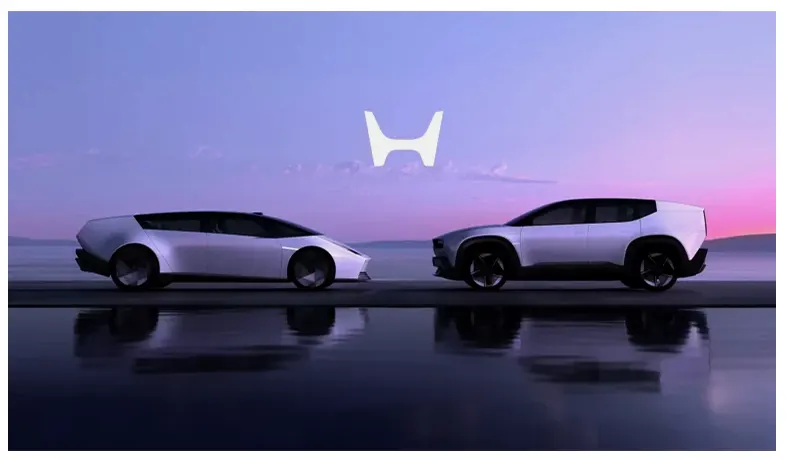
Honda Motor Co. has reassessed its global electrification strategy and cancelled three electric models planned for North America—the Honda 0 SUV, Honda 0 Saloon and the Acura RSX. The move follows slower EV demand in some markets, shifting regulations and intensified competition, particularly from Chinese EV makers. As part of the shift, Honda will prioritize hybrid technologies and strengthen its product and manufacturing competitiveness in India.
-
Three EV projects shelved: The Honda 0 SUV, Honda 0 Saloon, and Acura RSX electric models will no longer move forward for production in the U.S.
-
Potential losses up to ¥2.5 trillion (~$15.8 billion): Honda estimates that revising its EV strategy could lead to total losses of as much as ¥2.5 trillion across the current and upcoming fiscal years.
-
Profit outlook turns negative: Instead of the earlier projection of a ¥550 billion operating profit, the company now anticipates an operating loss between ¥270 billion and ¥570 billion (~$1.7–$3.6 billion).
-
Shift toward hybrids: Honda intends to place greater emphasis on hybrid vehicles and reevaluate how it invests in electric vehicle development while keeping a close watch on market demand.
Honda said launching the three EV models in the current environment could produce significant long‑term losses, prompting cancellation of their development and planned launch. The company pointed to cooling EV adoption after changes to incentives and regulatory frameworks, evolving consumer preferences, and U.S. tariff shifts that have affected profitability across powertrains.
The automaker highlighted rising pressure from Chinese EV manufacturers, which have gained market traction through faster development cycles and software‑centric offerings—advanced driver assistance, connectivity and over‑the‑air updates—that many consumers now expect. These competitors have compressed margins and raised the bar for product differentiation, complicating legacy automakers’ EV strategies.
Financial Impact and Forecast Revisions Honda expects sizeable financial repercussions for the fiscal year ending March 2026. It projects elevated operating expenses of ¥820 billion–¥1.12 trillion and warns of special losses of ¥340–¥570 billion tied to impairments and write‑downs, particularly related to China investments. The company says the total strategic impact could reach as much as ¥2.5 trillion over time, prompting a revision of fiscal forecasts from projected profit to potential loss. Despite the hit, Honda plans to maintain shareholder returns, supported by profits from its motorcycle and financial services businesses.
Hybrid Priority and Measured EV Rollout The strategic shift emphasizes hybrids as a pragmatic bridge to lower emissions in markets where full EV adoption is uneven due to infrastructure, consumer price sensitivity, or regulatory timing. Hybrids allow reductions in fuel consumption and emissions without the same dependence on charging infrastructure. Honda will continue EV R&D but will pace commercialization to align capital deployment with market demand and regulatory clarity.
India as a Strategic Growth and Manufacturing Hub India is singled out as a key market where Honda will bolster its lineup and improve cost competitiveness. The company had already planned a larger role for India: in October 2025 it confirmed the production Honda 0 Alpha electric SUV would be built at its Tapukara, Rajasthan plant for domestic sale and exports. While Honda recalibrates some global EV plans, India remains central to future product and manufacturing plans, combining hybrid strategies with next‑generation electrified vehicles and potential export capabilities.
Operational, Supply‑Chain and Geopolitical Considerations Cancelling North American EV programs frees resources but creates sunk costs in engineering, tooling and supplier arrangements. Impairments tied to China investments reflect the challenge of aligning long‑term commitments with shifting market signals. Honda must manage battery and semiconductor procurement, supplier renegotiations and possible plant repurposing. The decision is shaped by geopolitical and trade factors—industrial policy in China, tariff changes in the U.S., and India’s manufacturing incentives—that influence where production and exports are most viable.
Impact on Stakeholders
- Consumers: Short‑term availability of some BEV models will slow in markets like North America; hybrid choices may expand.
- Dealers and suppliers: May face retooling, renegotiation of contracts, and demand shifts.
- Investors: Will weigh near‑term earnings hits against Honda’s ability to protect margins via hybrids and leverage motorcycle/finance earnings.
- Policymakers: Honda’s move highlights how incentives, infrastructure and regulatory clarity affect automaker planning.
Competitive Landscape and Software Gap A core challenge for legacy automakers is catching up with software‑first entrants. Chinese EV firms emphasize connectivity, in‑car software ecosystems, and rapid iterative updates—areas where traditional OEMs must invest heavily. Honda’s pivot buys time to strengthen software capabilities while relying on hybrids to maintain volume and margin.
Longer‑Term Outlook The auto industry is likely to pursue a staggered transition to electrification, with regions and companies advancing at different paces. Success will favor manufacturers that combine cost‑efficient manufacturing, robust software ecosystems and flexible portfolios across ICE, hybrid and EV. Honda’s calibrated approach may preserve profitability if it improves execution in hybrids and accelerates software and battery investments where needed. India’s role as a cost‑competitive production and export hub offers strategic advantage if Honda can capture scale and reduce unit costs.