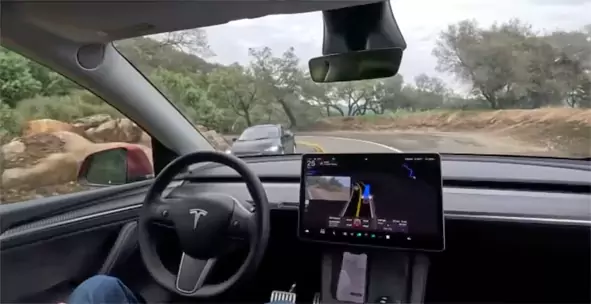
U.S. Safety Regulator Escalates Probe Into Tesla’s FSD Technology
Electric vehicle giant Tesla is once again under regulatory scrutiny in the United States, as safety concerns surrounding its driver-assistance technology continue to grow. The National Highway Traffic Safety Administration (NHTSA) has officially upgraded its investigation into Tesla’s Full Self-Driving (FSD) system to an “engineering analysis,” signaling a more serious phase that could potentially lead to enforcement action or a large-scale recall.
The development comes after a series of crashes involving Tesla vehicles operating with FSD in low-visibility conditions. With millions of vehicles potentially affected, the outcome of this probe could have far-reaching implications not only for Tesla but also for the broader autonomous driving industry.
Nine Crashes Under Investigation Raise Red Flags
According to a memo issued on March 18, the NHTSA is closely analysing nine separate incidents involving Tesla vehicles equipped with self-driving software. These crashes reportedly occurred in challenging environments such as dense fog, strong sunlight glare, and airborne dust—conditions that can significantly reduce visibility.
Regulators are particularly concerned that in these situations, Tesla’s system may have failed to adequately warn drivers to take control of the vehicle. The lack of timely alerts is being examined as a possible contributing factor in these accidents.
The investigation, which was initially launched in 2024, has now escalated due to the seriousness of the findings. Authorities estimate that as many as 3.2 million Tesla vehicles across the United States could fall within the scope of this probe.
Visibility Challenges and Camera-Based System in Focus
A key area of concern for regulators is Tesla’s reliance on a vision-only system. Unlike some competing autonomous technologies that incorporate radar and lidar sensors, Tesla’s approach primarily depends on cameras to interpret the vehicle’s surroundings.
While this strategy simplifies hardware and reduces costs, it may also introduce limitations, especially in adverse weather or lighting conditions. In scenarios involving fog or glare, cameras can struggle to accurately detect road hazards, potentially compromising the system’s performance.
The NHTSA is investigating whether this reliance on cameras alone reduces the effectiveness of Tesla’s FSD system in real-world driving situations, particularly when quick decision-making is critical for safety.
Tesla Points to Software Updates as a Solution
In response to the ongoing investigation, Tesla has highlighted improvements made through its over-the-air (OTA) software updates. The company has informed regulators that three of the nine crashes currently under review might not have occurred if the vehicles had been running the latest version of the FSD software.
Tesla’s ability to push updates remotely is considered one of its strengths, allowing the company to enhance vehicle performance and safety features without requiring physical recalls. However, regulators will need to assess whether these updates are sufficient to address the broader concerns identified in the probe.
Critical Timing as Tesla Pushes Autonomous Vision
The escalation of the investigation comes at a crucial moment for Tesla’s future strategy. As competition intensifies in the electric vehicle market and sales growth faces pressure, the company is increasingly focusing on autonomous driving as a key driver of long-term value.
CEO Elon Musk has repeatedly emphasized the importance of self-driving technology, describing it as central to Tesla’s future. The company is planning to launch a robotaxi service in multiple U.S. cities later this year, aiming to deploy vehicles capable of operating without human drivers.
In addition, Tesla is preparing to begin production of its highly anticipated “Cybercab,” a next-generation vehicle designed without a steering wheel or pedals. This bold move represents a significant step toward full autonomy, but it also raises the stakes for ensuring that the underlying technology is safe and reliable.
The ongoing probe adds a layer of uncertainty to these plans, as any regulatory action could delay or complicate Tesla’s rollout of autonomous services.
Debate Over ‘Full Self-Driving’ Branding
Tesla’s FSD system has long been at the center of debate, particularly regarding how it is marketed. The term “Full Self-Driving” has been criticized by regulators and safety experts for potentially misleading consumers into believing the system is fully autonomous.
In reality, Tesla’s FSD technology remains an advanced driver-assistance system that requires constant driver supervision. Users are expected to stay alert and be ready to take control at any time.
To address these concerns, Tesla has revised the branding to “Full Self-Driving (Supervised).” While this change aims to clarify the system’s capabilities, critics argue that more needs to be done to ensure drivers fully understand their responsibilities.
Multiple Investigations Add to Tesla’s Challenges
The current probe into FSD crashes is not an isolated issue. Tesla is also facing additional investigations from U.S. regulators on other safety-related concerns.
One such inquiry involves reports of Tesla vehicles failing to stop at red traffic lights while using FSD. This raises questions about the system’s ability to interpret traffic signals accurately and respond appropriately.
Another investigation focuses on door handle mechanisms that allegedly malfunctioned during crashes, potentially trapping occupants inside the vehicle. These issues further contribute to the growing scrutiny surrounding Tesla’s safety practices.
As of now, Tesla has not publicly responded to the latest escalation in the NHTSA investigation.
Market Reaction Reflects Investor Concerns
The news of the intensified probe has had an immediate impact on Tesla’s market performance. Following the announcement, Tesla’s stock declined by 3.2%, closing at $380.30.
This drop reflects investor concerns about the potential financial and reputational impact of the investigation. A large-scale recall or regulatory action could lead to increased costs and affect Tesla’s growth trajectory.
What an Engineering Analysis Means for Tesla
The transition to an engineering analysis is a significant step in the regulatory process. At this stage, the NHTSA conducts a detailed evaluation of technical data, system performance, and potential safety defects.
If the agency identifies systemic issues, it may proceed with enforcement actions such as mandating recalls, imposing fines, or requiring design changes. For Tesla, this could involve updates to both hardware and software systems.
Given the scale of the investigation, any resulting action could have wide-ranging implications for the company and the broader EV industry.
Balancing Innovation With Safety
Tesla’s ambitious push toward autonomous driving highlights the challenges of balancing rapid technological innovation with safety and regulatory compliance. While the company continues to push boundaries, the current situation underscores the importance of ensuring that new technologies are thoroughly tested and validated.
As the automotive industry moves closer to fully autonomous vehicles, maintaining public trust will be critical. Regulators, manufacturers, and consumers all have a role to play in ensuring that safety remains a top priority.
NB- The escalation of the NHTSA’s investigation into Tesla’s Full Self-Driving system marks a critical moment for the company. With millions of vehicles potentially affected and major plans for autonomous services on the horizon, the stakes are higher than ever.
While Tesla continues to innovate and lead in the EV space, the outcome of this probe will play a crucial role in shaping its future. Ensuring that safety standards keep pace with technological advancements will be essential as the industry moves toward a fully autonomous era.