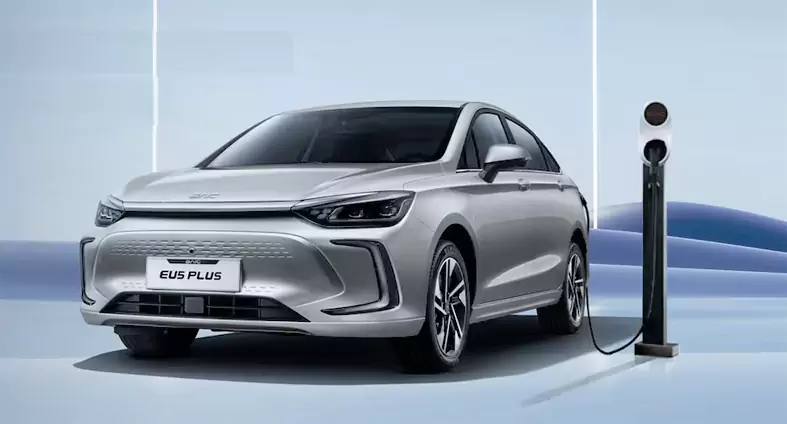
One of the biggest challenges with electric vehicles is charging. The term “range anxiety” comes from this concern, where people worry about their car running out of charge and where they will recharge it. Chinese companies are rapidly working on solutions to this problem. One such breakthrough is a sodium-ion battery that can be fully charged in just 11 minutes.
Electric cars are being promoted worldwide, but they have yet to achieve mass adoption. The main reasons are charging time and limited range. While petrol and diesel vehicles can be refueled almost anywhere, EV charging infrastructure is still limited.
Additionally, EVs take longer to charge. Chinese automobile giant BAIC (Beijing Automotive Group Co., Ltd.) claims to have made significant progress in solving this issue. The company has announced a major breakthrough in sodium-ion battery technology. BAIC manufactures both electric and internal combustion engine (ICE) vehicles.
According to the company’s research division, a prototype sodium-ion battery has been developed with an energy density of 170 Wh/kg. It supports 4C fast charging and can be fully charged in just 11 minutes under test conditions. Real-world charging times may vary. The system is designed to operate efficiently across a wide range of temperatures.
Works even in low temperatures
The battery is designed to function in temperatures ranging from -40°C to 60°C. The company claims that even at -20°C, the battery retains around 92% of its capacity, highlighting its strong performance in cold conditions.
The battery has also passed internal validation testing. Thermal tests showed that it remains stable at temperatures of up to 200°C.
This sodium-ion battery is part of BAIC’s Aurora battery program, which includes lithium-ion, solid-state, and sodium-ion technologies. The company has also completed validation for the mass production process of prismatic sodium-ion cells.
Sodium-ion batteries are emerging as a promising alternative in China, particularly for low-cost and cold-weather applications. Compared to lithium iron phosphate (LFP) batteries, sodium-ion batteries use more abundant raw materials and perform better in low temperatures. However, they still lag behind in energy density.
Many companies are working on this technology
BAIC has filed around 20 patents related to this program, covering materials, cell design, manufacturing processes, and testing. The company is also working on advanced charging strategies, electrochemical modeling, and battery degradation.
Other Chinese companies are also accelerating development in this field. In February 2026, Changan Automobile and CATL unveiled the first mass-produced sodium-ion electric car. It features a 45 kWh battery pack with a claimed range of over 400 km and could be launched by mid-2026.
As for BAIC, the company has not yet announced a commercial launch timeline for its sodium-ion battery. The technology is currently in the pre-commercial stage.