AI Breakthrough in Battery Life Prediction
A major breakthrough in artificial intelligence (AI) could transform how battery life is predicted. Scientists have developed a new AI-based method that can estimate battery lifespan with nearly 90% accuracy, helping reduce unexpected failures and improve reliability.
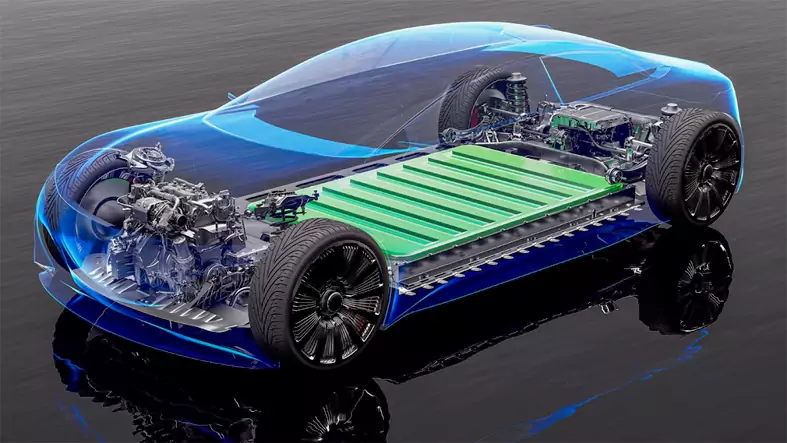
This innovation is particularly important for electric vehicles (EVs), where battery performance plays a crucial role in overall efficiency and safety.
What Is RUL and Why It Matters
The new system focuses on predicting Remaining Useful Life (RUL)—the point at which a battery’s capacity drops below an acceptable level.
By accurately forecasting RUL, manufacturers and users can:
- Prevent sudden battery failures
- Optimize charging and usage cycles
- Reduce long-term maintenance costs
How the AI Model Works
The researchers developed a hybrid AI model that combines multiple advanced techniques to improve prediction accuracy:
- CEEMDAN method: Used to remove noise from battery signal data
- Time-series analysis: Tracks performance changes over charge-discharge cycles
- Particle filter: Corrects prediction errors and refines results
This layered approach allows the system to better understand battery degradation patterns over time.
Test Results and Accuracy
The model was tested on well-known datasets, including:
- NASA battery datasets
- CALCE (Center for Advanced Life Cycle Engineering) datasets
Results showed:
- 87.27% improvement in prediction accuracy
- 82.88% better performance than traditional particle filter methods
- 55.43% improvement over simpler models
These results highlight the system’s ability to deliver highly reliable predictions.
Impact on Electric Vehicles and Beyond
This AI-driven approach has significant implications for the EV industry:
- Improved vehicle safety by predicting failures early
- Lower battery maintenance costs
- Enhanced battery lifespan management
- Better consumer confidence in EV technology
Beyond EVs, the technology could also be applied to consumer electronics, renewable energy storage, and industrial systems.
Note: The development of an AI model capable of predicting battery life with near 90% accuracy marks a significant step forward. As this technology evolves, it could play a key role in making electric vehicles more reliable, cost-effective, and widely adopted.