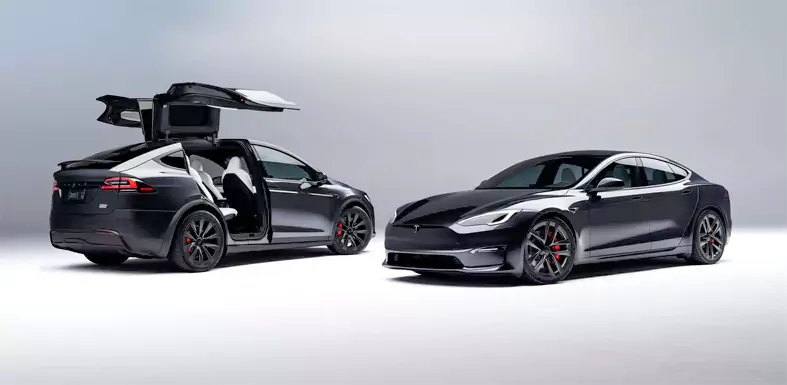
Tesla has officially discontinued its iconic electric vehicles, the Tesla Model S and Tesla Model X, marking the end of an era for two of the most influential EVs in automotive history. After more than a decade in production, Tesla CEO Elon Musk confirmed that custom orders for both models have been closed, with only existing inventory available for purchase.
The decision signals a major strategic shift for Tesla as it moves its focus toward future technologies such as autonomy and robotics. According to Musk, the Model S and Model X programs are being brought to a close with an “honorable discharge,” reflecting their importance in shaping the modern electric vehicle landscape while making way for the company’s next phase of innovation.
The Model S, introduced in 2012, is widely regarded as the world’s first truly modern electric car. It set new benchmarks with its long driving range, fast charging capabilities, high performance, and premium comfort. Over the years, it established Tesla as a leader in the EV market and influenced the entire automotive industry to accelerate its transition toward electrification. Despite undergoing multiple technical upgrades, the Model S retained a design that remained largely unchanged from its original version, showcasing its timeless appeal.
Similarly, the Model X, which entered production in 2015, quickly gained popularity in the luxury SUV segment. Known for its distinctive Falcon-wing rear doors, spacious interior, and strong long-distance performance, the Model X became a favorite among families and EV enthusiasts alike. Both models shared a common platform and served as Tesla’s flagship offerings for years, representing the pinnacle of electric luxury and innovation.
However, the market dynamics began to shift with the introduction of the more affordable Tesla Model 3 in 2017. Its competitive pricing and minimalist design attracted a broader audience, significantly boosting Tesla’s global sales. The trend continued with the launch of the Tesla Model Y in 2020, which quickly became one of the company’s best-selling models due to its practicality and mass-market appeal.
As a result, the popularity of the Model S and Model X gradually declined. Tesla began categorizing them under “Other Models” in its sales reports, indicating their reduced significance in the company’s overall portfolio. The shift is evident in delivery numbers, with Tesla delivering around 1.6 million units of the Model 3 and Model Y combined last year, compared to just over 50,000 units across all other models, including the Model S and Model X.
Currently, Tesla’s website in markets like the United States redirects potential buyers to existing inventory listings instead of offering new custom orders. Remaining units come with added benefits such as free DC fast charging at Tesla Superchargers and lifetime Premium Connectivity, which includes advanced features like satellite maps, weather updates, and entertainment services.
In conclusion, the discontinuation of the Model S and Model X marks a significant turning point for Tesla and the EV industry. While these models played a crucial role in defining modern electric mobility, the company is now focusing on scalable, affordable vehicles and next-generation technologies. This transition reflects broader industry trends, where innovation, accessibility, and future mobility solutions are becoming the primary drivers of growth.
Source: News//Link