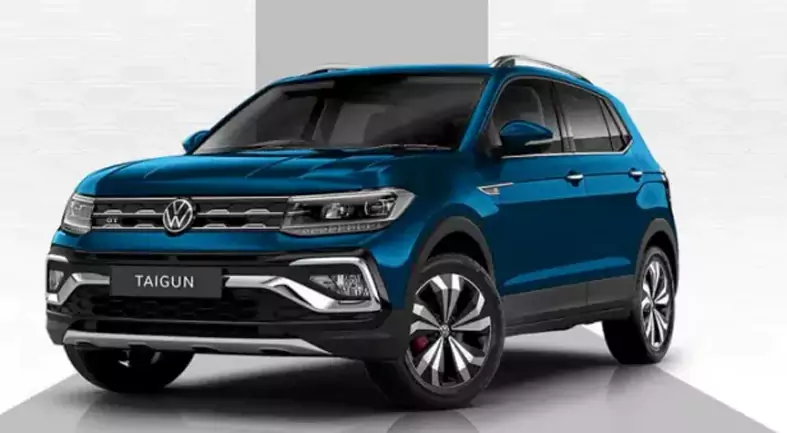
Volkswagen Taigun Facelift: Volkswagen is set to launch the facelifted version of its popular mid-size SUV, the Taigun, in India on April 9. The updated model will feature minor design tweaks, new features, and improved interiors.
German automaker Volkswagen has officially teased the upcoming Taigun facelift ahead of its launch. With this update, the company aims to strengthen its position in India’s highly competitive mid-size SUV segment, currently dominated by rivals like the Hyundai Creta and Kia Seltos.
Exterior Design Updates
The new Taigun is expected to receive subtle design changes rather than a complete overhaul. Updates may include:
- New LED headlamps and tail lamps
- Revised front and rear bumpers
- New alloy wheel designs
Additionally, premium features like a panoramic sunroof and rear seat massage function could be introduced in the top variants. For lower variants, features such as a single-pane sunroof, rear washer, and wiper may become standard.
Interior Upgrades
The cabin is likely to see more noticeable improvements. Expected updates include:
- Larger touchscreen infotainment system
- New fully digital instrument cluster
- Enhanced ambient lighting
- Improved materials for a more premium feel
Volkswagen is expected to focus on comfort and modern technology to make the Taigun more appealing to buyers.
Engine and Mileage
Mechanically, the Taigun is expected to remain unchanged:
- 1.0-litre TSI petrol engine: Produces 115 hp and will continue with a 6-speed manual gearbox. The current automatic transmission may be replaced with a new 8-speed automatic.
- 1.5-litre TSI petrol engine: Produces 150 hp and will continue with both a 6-speed manual and a 7-speed DSG automatic gearbox.
Fuel efficiency is expected to improve slightly over the current mileage figures of 18.15 to 19.87 kmpl.
Background and Market Position
The Volkswagen Taigun was first launched in September 2021 as part of the brand’s India 2.0 strategy. Currently priced between ₹10.6 lakh and ₹19.2 lakh (ex-showroom), the SUV has seen fluctuating sales in recent months.
While demand increased during the festive season in late 2025, sales slowed down in early 2026 due to rising competition. New rivals with advanced features and hybrid technology have made the segment more competitive than ever.