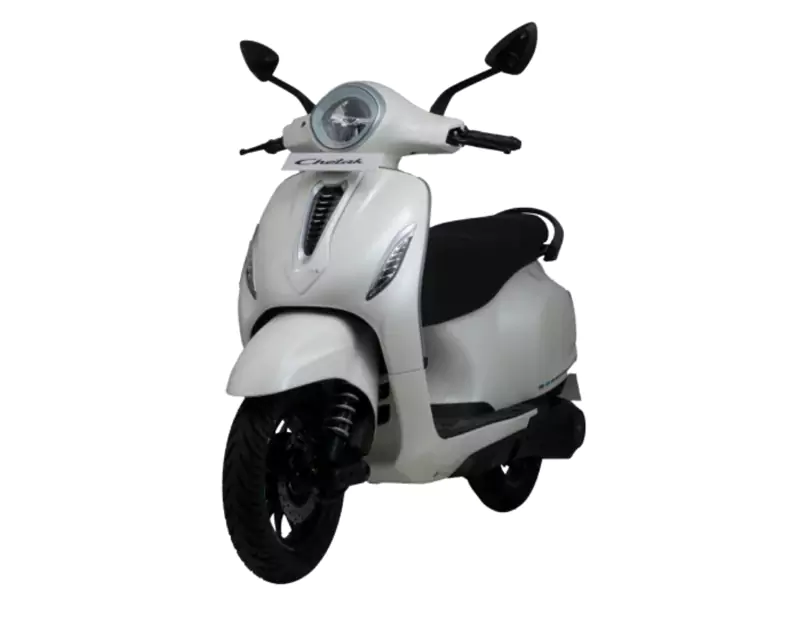
The government’s EV policy has come under sharp criticism from this businessman, who said, “In 36 years, I have never seen such a policy failure.”
Rajiv Bajaj, Managing Director of Bajaj Auto, is known for his outspoken nature. He never hesitates to express his views. Once again, he is in the headlines for the same reason. This time, he has criticized the EV policy of the Government of Maharashtra.
Rajiv Bajaj, Managing Director of Bajaj Auto, is known for his frankness and has previously criticized several policies that he believes negatively impacted the auto industry. Notably, it is rare in India to see industrialists openly criticize governments and their policies.
Speaking to CNBC-TV18, Bajaj said, “In my 36 years, I have never seen a policy failure, but I fear I will see it with the Maharashtra government’s EV policy.” He added that the company has received only a small portion of the subsidy due from the state government and expressed doubts about receiving the remaining amount.
Claim of Rs 1,000 Crore PLI Scheme
Despite this, he reiterated his strong reservations about subsidies, arguing that they “slow down innovation and reduce efficiency.” He welcomed the removal of subsidies for electric three-wheelers and expressed hope that subsidies for two-wheelers would also be withdrawn by March this year.
Talking about incentives, Bajaj said the company’s total claims under the Government of India’s Production Linked Incentive (PLI) scheme would be around Rs 1,000 crore, of which more than Rs 642 crore has already been disbursed. As a result, the two-wheeler manufacturer has stabilized electric two-wheeler production at around 30,000 units per month and plans to increase it to 40,000 units per month from April this year. He noted that the electric two-wheeler industry is already strengthening, with the top five players accounting for 80% of the market share.
50% Cut in RoDTEP Scheme Will Hurt
Apart from the Maharashtra EV policy, Bajaj also criticized the 50% reduction in the Remission of Duties and Taxes on Exported Products (RoDTEP) scheme, saying it can only have negative consequences.
He stressed that the government should improve ease of doing business in areas such as labor, laws, land, logistics, and electricity, noting that operating in India remains more challenging compared to markets like Thailand and Vietnam.
Bajaj also clarified that RoDTEP is not a subsidy but a mechanism designed to offset shortcomings in the operating ecosystem for exporters. Speaking about exports in his interview with CNBC-TV18, Bajaj said he expects export performance in Q4 to reach around 600,000 units. He further added that exports are likely to rise from 200,000 units to 250,000 units in the coming months. He also confirmed monthly sales of 10,000 units to Sri Lanka.