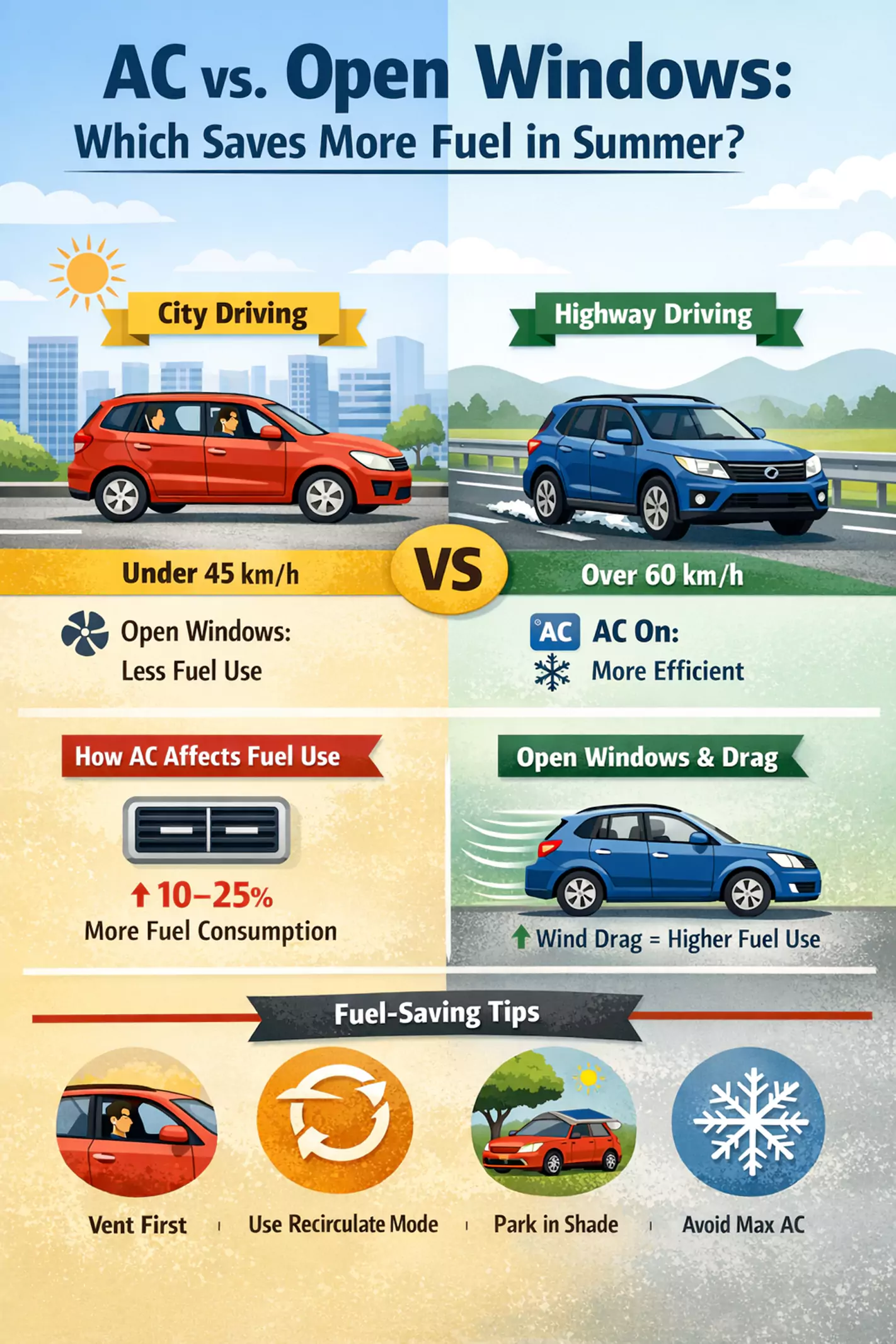
Both AC and open-window driving have their advantages in summer. At slow city speeds, open windows can help save fuel, while AC is more suitable on highways because open windows increase aerodynamic drag. Although AC does put some load on the engine, the difference is not very significant. The right choice depends on your driving speed and conditions.
As summer approaches, drivers often face a common question: should they use the AC or keep the windows open to save fuel? Many people believe that turning off the AC always saves petrol, but the reality is more complex. It largely depends on how fast you are driving.
Vehicle Speed
The most important factor is vehicle speed. If you’re driving in the city at speeds below 40–45 km/h, keeping the windows open is more fuel-efficient. At such low speeds, air resistance is minimal, so open windows do not significantly affect the vehicle.
Running the AC puts extra load on the engine, which can increase fuel consumption. However, once the speed exceeds 50–60 km/h, the situation changes. Open windows disrupt airflow and create drag, forcing the engine to work harder. In such cases, using the AC becomes a better option.
How AC Affects Fuel Consumption
A car’s air conditioning system runs on engine power. When you switch on the AC:
- It consumes around 3–7 horsepower
- Fuel consumption can increase by 10% to 25%, especially in extreme heat
In slow traffic, where the engine is already under stress, running the AC can further reduce mileage.
What Happens When Windows Are Open?
Driving with open windows does not directly strain the engine. However, it affects the vehicle’s aerodynamics—its ability to move smoothly through the air.
Modern cars are designed to minimize air resistance. When windows are open at high speeds, airflow becomes turbulent, increasing drag. This drag can rise by around 8% in SUVs and up to 20% in smaller cars. As a result, the engine must work harder, increasing fuel consumption.
City vs Highway Driving
In city traffic, where speeds are low and stops are frequent, driving with open windows is generally more fuel-efficient than using AC.
On highways, where vehicles travel at higher speeds, using AC is more efficient. Keeping windows closed helps maintain better aerodynamics, allowing the car to run more smoothly and efficiently.
Mileage Difference
In real-world conditions, the mileage difference between using AC and open windows is not very large—usually around 1–2 km per litre. However, over time, even this small difference can affect overall fuel consumption.
Tips to Save Fuel and Stay Cool
There are a few simple ways to keep your car cool while saving fuel:
- Open the windows briefly before driving to release hot air.
- Use recirculation mode after turning on the AC to reduce load.
- Avoid setting the AC to maximum cooling all the time.
- Park in shaded areas or use sunshades to keep the cabin cool.
In conclusion, windows are better at low speeds, while AC is more effective at high speeds. The best choice depends on your driving conditions.