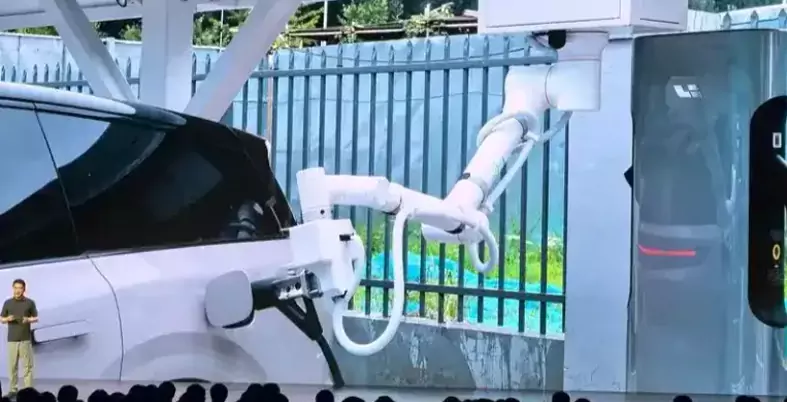
China is continuing to actively implement new technologies for charging electric vehicles. Instead of relying solely on stationary charging stations, the country has begun deploying mobile robots that drive directly to parked cars. This approach simplifies the charging process and frees drivers from searching for available charging points.
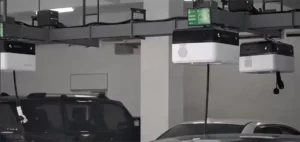
The robot moves along an overhead track and connects to the vehicle automatically. The system is activated via a QR code or through a WeChat mini-app. Using cameras and sensors, the robot identifies the charging port and plugs in the cable without human intervention. A single module can service multiple parking spaces simultaneously.
✨🇨🇳China's overhead mobile charging stations support on-demand park-and-charge. Their automatic moving design eliminates the need for drivers to wait in line for charging. pic.twitter.com/3gCSArzvlC
— 🇨🇳XuZhenqing徐祯卿 (@XueJia24682) February 20, 2026
Charging is performed using the Level 2 AC standard. While slower than DC fast charging, it is well suited for locations where vehicles remain parked for extended periods. Companies such as Li Auto and CGXi are already testing similar systems. Meanwhile, the HAVA robot — featuring 18 degrees of freedom — can reportedly service eight or more vehicles.
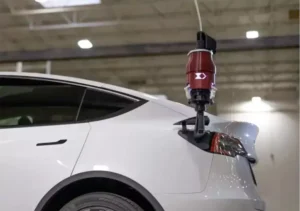
China is rapidly expanding its EV infrastructure. The country already has approximately 14.4 million charging points supporting around 31.4 million electric vehicles. By 2030, experts expect that up to 20% of EVs in China could be charged using robotic systems.