
German researchers have demonstrated that sodium-ion batteries can effectively use wood-derived materials, potentially offering a more sustainable alternative to conventional battery technologies that rely on rare earth elements and intensive mining.
The innovation centers on lignin, a natural polymer found in plant cell walls and widely available as a byproduct of the wood and paper industries. When properly processed—usually through carbonization—lignin can achieve good electrical conductivity. Its redox-active properties also allow it to store and release electrons efficiently, making it suitable for battery applications.
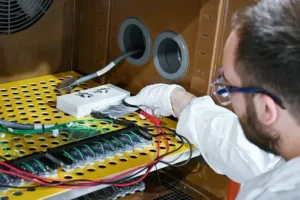
A prototype sodium-ion battery using a lignin-based anode was jointly developed by the Fraunhofer Institute for Ceramic Technologies and Systems and Friedrich Schiller University Jena. The raw material was supplied by a regional company focused on producing cellulose, bioenergy, and biochemicals from wood.
The first lab-scale cell achieved a capacity of 1 Ah—enough to power small electronic devices. After 100 charge–discharge cycles, the battery showed no significant performance loss. Research coordinator Lukas Medenbach said the team is now targeting 200 stable cycles by the end of the project.
Detailed technical specifications of the technology have not yet been disclosed.