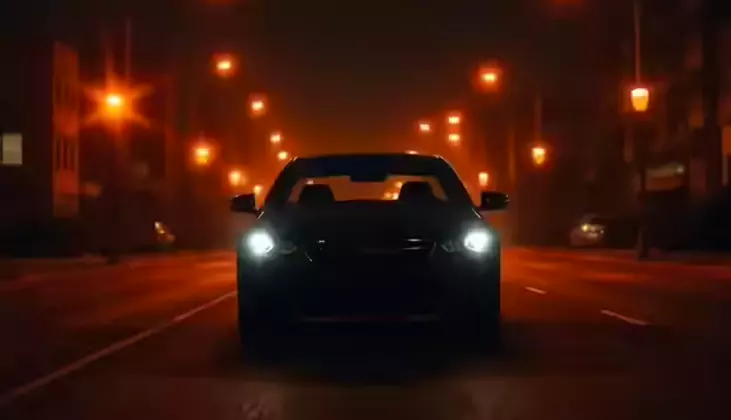
As cars become smarter, concerns about safety are also rising. A recent accident in China has highlighted the potential risks of over-reliance on voice commands in modern vehicles.
How the Accident Happened
The incident involved a Lynk & Co Z20. The driver asked the car’s voice assistant to turn off the interior reading lights. However, the system misinterpreted the command and switched off all lights, including the headlights, while the vehicle was moving.
Suddenly plunged into darkness, the driver failed to notice a road divider and the car collided with it.
System Failed to Respond
What made the situation worse was the system’s response afterward. When the headlights went off, the driver immediately commanded the assistant to turn them back on. The system reportedly replied that the task could not be completed.
Seconds later, the vehicle crashed. The entire incident was captured on the car’s dashcam.
Company’s Immediate Action
Following the accident, Lynk & Co issued an apology and quickly rolled out an emergency OTA software update.
According to the company:
-
The system will no longer allow headlights to be turned off while the car is in motion
-
Risky commands will be automatically rejected
Similar Issue Found in Other Brands
The problem was not isolated to one manufacturer. After the incident, owners of other Chinese brands such as Zeekr and Deepal tested their cars.
In some cases, when users gave the command “Turn off all lights,” the headlights also switched off — revealing a broader potential safety gap in voice-control logic.
Smart Cars Bring New Risks
Older vehicles relied on physical switches for critical functions like headlights and AC, making accidental deactivation unlikely. Modern vehicles, however, increasingly depend on:
-
Voice assistants
-
Touchscreen controls
-
AI-driven vehicle systems
While these features improve convenience, they also introduce new failure points. Even a small voice-recognition error can lead to serious consequences.
The incident serves as a reminder that as automotive technology advances, fail-safe design and human override options remain critically important for road safety.