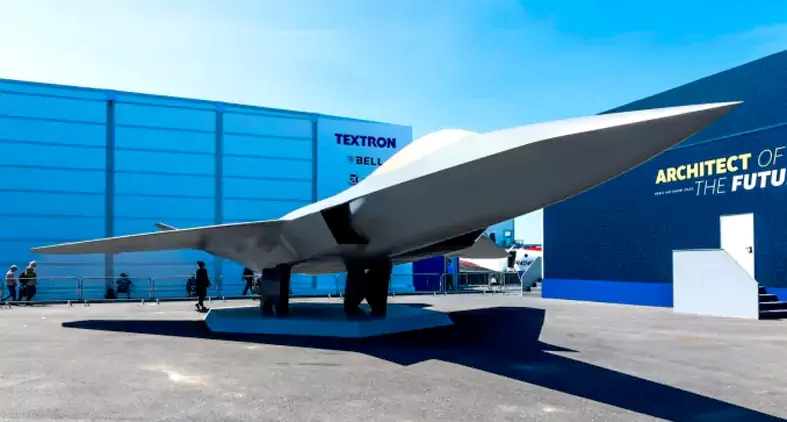
FCAS Tensions Rise: Airbus Urges Respect for Initial Agreements with Dassault
In a confidential letter addressed to the Élysée Palace at the request of Emmanuel Macron, who is seeking to revive the SCAF/FCAS program, Airbus Defence and Space CEO Mike Schoellhorn has called for strict respect of the initial agreements signed by all parties. Airbus also made it clear that becoming a subcontractor to Dassault Aviation is out of the question.
Confidential Letter Sent to Revive FCAS
At the request of the French president, Airbus recently sent a confidential letter to the Élysée Palace. The document, signed by the head of Airbus Defence and Space, reportedly proposes solutions to revive the Future Combat Air System (FCAS) — the major European defense program involving Germany, Spain, and France.
Launched in 2017 by Angela Merkel and Emmanuel Macron, the FCAS project has been stalled for months due to deep disagreements over program governance between Airbus and Dassault Aviation, the prime contractor.
Governance Dispute at the Core
The program is divided into three pillars. Airbus — representing Germany and Spain — accounts for roughly two-thirds of the SCAF workload, a structure that the Rafale manufacturer, Dassault Aviation, strongly contests.
As a result, the program remains stuck in Phase 1B (technological development), which was supposed to lead to Phase 2 involving the development and design of a demonstrator.
Airbus Rejects Subcontractor Role
In this latest letter — a follow-up to one sent at the end of December — Mike Schoellhorn reaffirmed Airbus’s firm position: the group will not accept a subcontractor role under Dassault Aviation in the SCAF program.
He called for full respect of the original agreements and reviewed the current state of cooperation. According to the letter, trust has eroded between Germany and Spain on one side and Dassault Aviation on the other.
Speaking on February 20 on the Air & Défense program on BFM Business and La Tribune, Guillaume Faury said that “bridges have not been burned” between the two groups — though tensions clearly remain high.
Little Sign of a Breakthrough
Despite diplomatic efforts, the latest communication offers little optimism about a near-term revival of the program. Neither industrial partner appears willing to compromise.
The French government currently seems to have limited leverage to force an agreement between Airbus and Dassault. The president’s office, which has been attempting to bring company leaders together for weeks, has yet to secure a meeting.
More concerning for the program, the Direction générale de l’armement (DGA) — France’s defense procurement agency — also appears to have lost the confidence of Germany and Spain in its role as program arbiter.
Airbus Signals It Has Alternatives
Faury expressed hope that cooperation could continue, stressing the strategic importance for Europe:
“Personally, I hope we find a solution that allows us to continue working together. That’s what Europe needs.”
However, he also underlined Airbus’s capabilities to act independently if required, noting the company’s major role in the Eurofighter Typhoon programme.
He emphasized that the Eurofighter stands as Europe’s biggest fighter-jet commercial success and proof that Airbus has both the technology and experience to manage large multinational defense programs.
Outlook
With positions hardening on both sides, the FCAS/SCAF program faces a critical moment. Unless political pressure or industrial compromise emerges soon, Europe’s flagship next-generation fighter project risks further delays — or worse, long-term fragmentation.