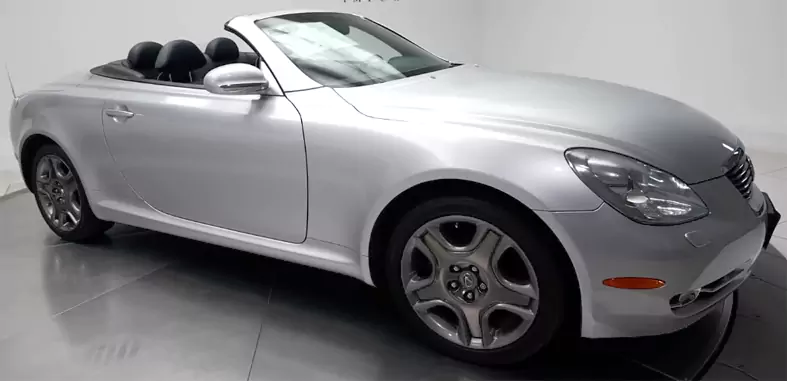
Fewer Germans are buying new convertibles, and the market is shrinking rapidly. Today, just five brands dominate almost the entire segment. However, despite falling new car sales, the number of convertibles on the road remains significant.
Convertible sales in Germany continue to decline. In 2025, only 33,924 units were sold, according to data from the Federal Motor Transport Authority. This represents a 17 percent drop compared to 2024 — which itself had already marked a long-term low. Currently, only one in every 84 new cars sold in Germany is a convertible.
Looking further back, the drop in enthusiasm becomes even more evident. Over the past decade, annual registrations of convertibles were more than double today’s levels. In 2009, the market peaked at 102,938 units — roughly three times the current volume.
Changing Lifestyles and SUV Competition
The decline can largely be attributed to changing consumer lifestyles. The traditional “freedom” appeal that once fueled convertible demand is now increasingly associated with SUVs, which have massively expanded their market share in recent years.
At the same time, the supply of convertibles has shrunk considerably. Many automakers have exited the segment entirely, while others now offer only one or two models.
The best-selling convertible in Germany in 2025 was the Volkswagen T-Roc Cabriolet, with 8,179 units sold. This strong performance helped Volkswagen almost single-handedly secure the top position in the German convertible market.
BMW ranked second with 6,499 units, followed by Mercedes-Benz (4,951 units), Porsche (4,946 units), and Mini (4,926 units). Together, these five brands account for nearly 87 percent of total convertible sales.
Nearly 2.2 Million Still on the Road
Despite years of declining new registrations, almost 2.2 million convertibles remain registered in Germany. One reason is that many owners carefully maintain their vehicles as cherished classics.
This figure reflects the situation as of January 1, 2025; newer data is not yet available. Nevertheless, the total number is slowly but steadily decreasing. As of January 1, 2024, there were roughly 24,000 more convertibles on German roads.
Convertibles are particularly common in the Upper Bavarian district of Starnberg, where they account for 8.6 percent of the registered vehicle fleet. The districts of Hochtaunus and Bad Dürkheim follow with 7.0 percent each. However, even in these traditional strongholds, the share of convertibles declined over the past year.
Pros & Cons of the Current Convertible Market
✅ Pros
-
Open-top driving experience still offers unmatched emotional appeal
-
Nearly 2.2 million convertibles remain on German roads
-
Strong demand for well-maintained classic convertibles
-
Premium brands still supporting the segment
-
Ideal lifestyle vehicle for enthusiasts
❌ Cons
-
Rapid decline in new convertible sales
-
Limited model availability from many automakers
-
SUVs attracting former convertible buyers
-
Higher ownership and maintenance costs
-
Practicality concerns compared to SUVs and sedans
FAQ
Q1. How many convertibles were sold in Germany in 2025?
A total of 33,924 convertibles were sold in Germany in 2025, marking a 17% year-on-year decline.
Q2. Why are convertible sales declining in Germany?
The decline is mainly due to changing lifestyles, the growing popularity of SUVs, and fewer convertible models being offered by manufacturers.
Q3. Which was the best-selling convertible in Germany in 2025?
The Volkswagen T‑Roc Cabriolet was the top-selling convertible with 8,179 units.
Q4. Which brands dominate the German convertible market?
The market is largely controlled by Volkswagen, BMW, Mercedes-Benz, Porsche, and Mini, which together account for about 87% of sales.
Q5. How many convertibles are currently on German roads?
As of January 1, 2025, nearly 2.2 million convertibles were still registered in Germany, although the number is gradually declining.