Next-Gen Vehicle Safety: Mobileye’s AI System Targets Mass Adoption by 2027 –
Mobileye, a global leader in advanced driver assistance and autonomous driving technologies, has announced a significant new production agreement with a leading US-based automaker to integrate its next-generation Driver Monitoring System (DMS) into future vehicle models. Headquartered in Israel, the company continues to strengthen its position in the rapidly evolving automotive safety and automation landscape through this large-scale deployment, which is expected to begin production in 2027.
The agreement marks a major milestone for Mobileye, as the deployment is projected to span millions of vehicles across multiple models and model years. This large-scale integration reflects growing demand from automakers for advanced, scalable, and cost-efficient safety systems that can be implemented across entire product portfolios rather than being limited to premium or niche offerings.
At the core of this deployment is Mobileye’s EyeQ6L system-on-chip (SoC), a highly advanced semiconductor platform designed to support a wide range of intelligent driving functions. By leveraging this chip, the company is able to consolidate multiple safety and monitoring features into a single hardware unit, significantly reducing system complexity while improving performance. The integration of the Driver Monitoring System into the EyeQ6L chip also expands the scope of an existing Advanced Driver Assistance Systems (ADAS) programme, further enhancing its capabilities.
What sets Mobileye’s solution apart is its integrated in-cabin sensing platform, which combines both Driver Monitoring System (DMS) and Occupant Monitoring System (OMS) functionalities. Traditionally, these systems have operated separately, often requiring additional hardware components and increasing costs for automakers. However, Mobileye’s unified approach allows both systems to run simultaneously alongside ADAS perception on a single chip, offering a streamlined and efficient solution.
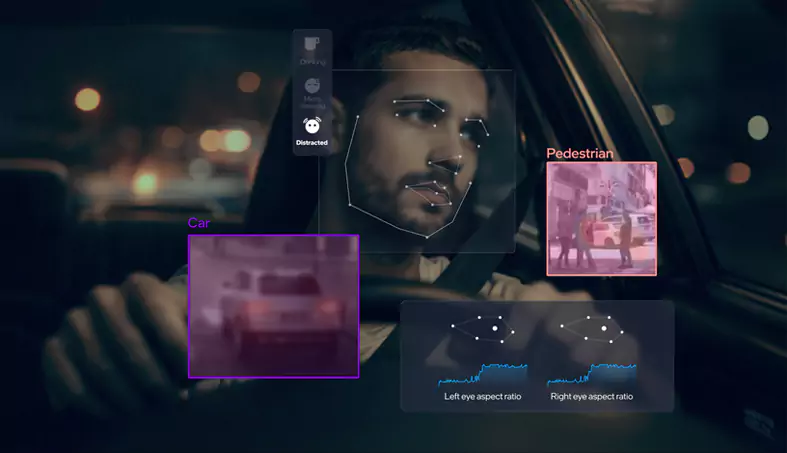
The Driver Monitoring System itself is designed to go beyond conventional in-cabin monitoring technologies. Instead of relying solely on internal sensors such as cameras tracking eye movement or head position, Mobileye’s system introduces a more sophisticated, context-aware approach. It evaluates driver attention by correlating gaze direction and engagement levels with real-time road conditions. This means the system can better determine whether a driver is truly attentive to the driving environment, rather than simply looking forward.
This advancement addresses a critical challenge in modern vehicle safety systems: reducing false alerts while improving the accuracy of interventions. In many existing systems, drivers may receive warnings even when they are adequately focused on the road, leading to frustration and reduced trust in the technology. Mobileye’s approach aims to minimize such occurrences by ensuring that alerts are triggered only when there is a genuine lapse in attention or engagement.
The importance of such systems is growing as automakers increasingly introduce hands-off driving features, particularly in higher levels of ADAS functionality. While these features offer greater convenience and comfort, they also raise concerns about driver complacency and overreliance on automation. Mobileye’s DMS is designed to address these concerns by maintaining a constant check on driver engagement, ensuring that human drivers remain an active part of the driving process.
This latest programme builds upon Mobileye’s earlier successes in integrating its DMS and OMS technologies into EyeQ6H-based platforms, including the SuperVision and Surround ADAS systems developed for a global automaker. These previous deployments demonstrated the effectiveness of Mobileye’s integrated approach and helped pave the way for broader adoption across the automotive industry.
According to company leadership, automakers are increasingly looking for solutions that allow them to scale advanced driving features across their entire lineup without incurring significant additional costs. This includes minimizing the need for extra hardware components and simplifying system integration. Mobileye’s single-chip solution directly addresses these requirements, offering both economic and technical advantages.
Nimrod Nehushtan, Executive Vice President of Business Development and Strategy at Mobileye, emphasized the company’s unique positioning in this space. He highlighted that the ability to run context-aware driver monitoring on a single ADAS chip and electronic control unit (ECU) platform is a key differentiator, enabling automakers to deploy advanced safety features at scale.
Another important aspect of Mobileye’s platform is its alignment with evolving global safety standards and regulatory frameworks. As automotive safety requirements become more stringent, technologies like DMS and OMS are expected to play a central role in achieving higher safety ratings. Mobileye’s system is designed to comply with upcoming protocols, including those set by Euro NCAP.
The company noted that its platform is expected to support Euro NCAP’s 2026 rating requirements, which are likely to place greater emphasis on advanced driver engagement detection rather than basic eye-tracking capabilities. This shift reflects a broader industry trend toward more comprehensive and intelligent safety systems that can better understand and respond to real-world driving conditions.
By anticipating these regulatory changes and incorporating them into its technology roadmap, Mobileye is positioning itself as a forward-thinking partner for automakers seeking to future-proof their vehicles. This proactive approach not only enhances safety but also provides manufacturers with a competitive edge in markets where safety ratings significantly influence consumer purchasing decisions.
The broader implications of this development extend beyond individual vehicle models or specific automakers. As the automotive industry transitions toward higher levels of automation, the integration of advanced monitoring systems will become increasingly essential. Technologies like Mobileye’s DMS are expected to serve as a bridge between traditional driver-controlled vehicles and fully autonomous systems, ensuring safety and reliability during this transitional phase.
Moreover, the scalability of Mobileye’s solution makes it particularly attractive in a market where cost efficiency is a critical factor. By enabling advanced features to be deployed across millions of vehicles without significant cost increases, the company is helping to democratize access to cutting-edge safety technologies. This aligns with the industry’s broader goal of making advanced driver assistance systems more accessible to a wider range of consumers.
In conclusion, Mobileye’s new production programme represents a significant step forward in the evolution of automotive safety and driver assistance technologies. Through its innovative use of integrated hardware and context-aware monitoring, the company is addressing key challenges associated with driver engagement and system reliability. As production ramps up toward 2027, this deployment is expected to play a crucial role in shaping the future of safe and intelligent mobility on a global scale.