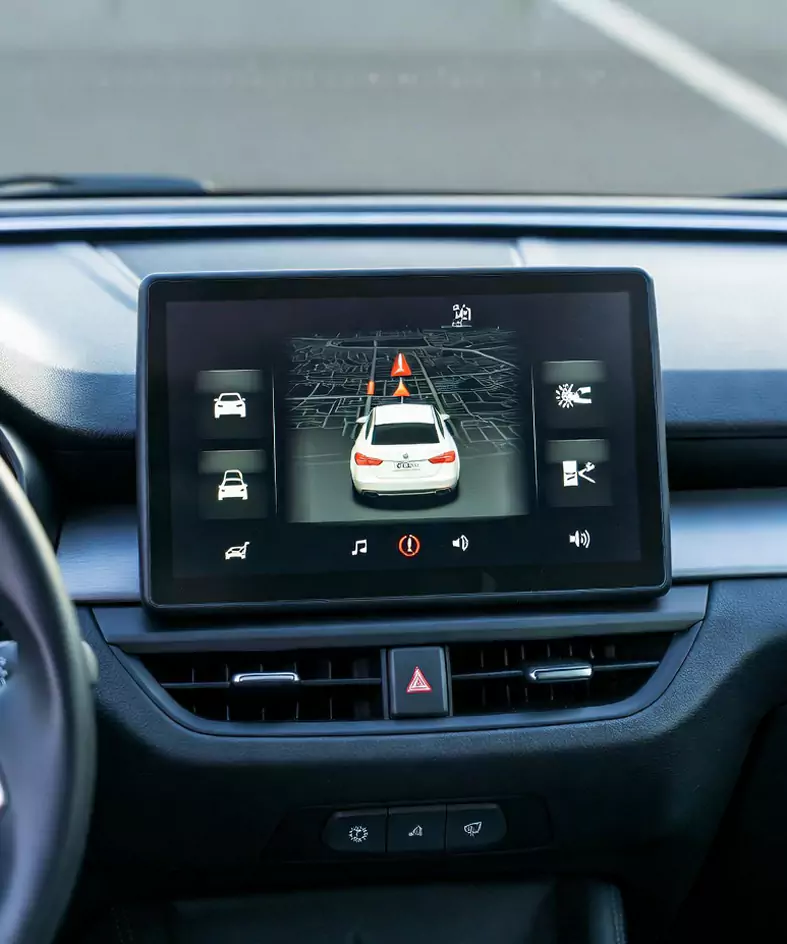
GPS System Facing Challenges: New Navigation Technologies Are Emerging
The Global Positioning System (GPS), once considered the world’s most reliable location-tracking technology, is now showing signs of vulnerability. According to a report by The Wall Street Journal, the satellite-based system relies on extremely weak signals from space, making it relatively easy to block or jam.
Originally developed by the United States Department of Defense during the Space Race, GPS has become essential for navigation in cars, smartphones, aircraft, and ships. However, because its signals travel thousands of kilometers from satellites to Earth, they can be disrupted by interference or deliberate jamming.
As these vulnerabilities become more evident, technology companies and startups around the world are exploring new navigation systems that do not rely entirely on satellites.
Technologies Being Developed as GPS Alternatives
Engineers are currently working on several advanced technologies that could reduce dependence on satellite navigation.
1. Quantum Navigation
One promising approach is quantum navigation, which uses precise sensors to measure the Earth’s magnetic field and tiny environmental variations to determine location.
A UK-based company, Q-CTRL, is actively developing this technology. Unlike GPS, quantum navigation does not rely on external satellite signals, making it far more resistant to jamming or interference.
Key advantages include:
-
Works without satellite signals
-
Highly accurate positioning
-
More secure for military and aviation use
2. AI-Based Visual Navigation
Another emerging solution uses artificial intelligence and cameras to identify surroundings and calculate location.
In this system:
-
Cameras capture images of nearby objects
-
AI identifies buildings, roads, mountains, and landmarks
-
The system compares these visuals with digital maps
This process allows the system to estimate location, building height, and even the number of floors in structures. Such technology could be particularly useful in urban environments where GPS signals are often weak.
3. Inertial Navigation Systems
The Inertial Navigation System (INS) is another satellite-independent technology.
It uses onboard sensors such as:
-
Accelerometers
-
Gyroscopes
These sensors measure speed, direction, and movement, enabling vehicles to calculate their position without relying on external signals. This system is already widely used in aircraft, submarines, and spacecraft.
GPS Jamming Creating “Dead Zones”
One of the biggest challenges facing GPS today is signal jamming.
In certain regions, especially sensitive geopolitical zones such as:
-
the Russia–Ukraine border
-
the Strait of Hormuz
GPS signals are often deliberately disrupted.
Small jamming devices costing less than $100 can block or interfere with satellite signals across large areas, sometimes affecting navigation systems thousands of kilometers away. This interference can create so-called “GPS dead zones,” where navigation systems stop functioning properly.
Although the Global Positioning System (GPS) remains the backbone of modern navigation, its vulnerabilities are becoming increasingly clear. With growing concerns about signal jamming and reliability, technologies such as quantum navigation, AI-based visual navigation, and inertial navigation systems may play a key role in the future of location tracking.
These innovations could eventually provide more secure, accurate, and resilient navigation systems for vehicles, aircraft, and everyday devices.