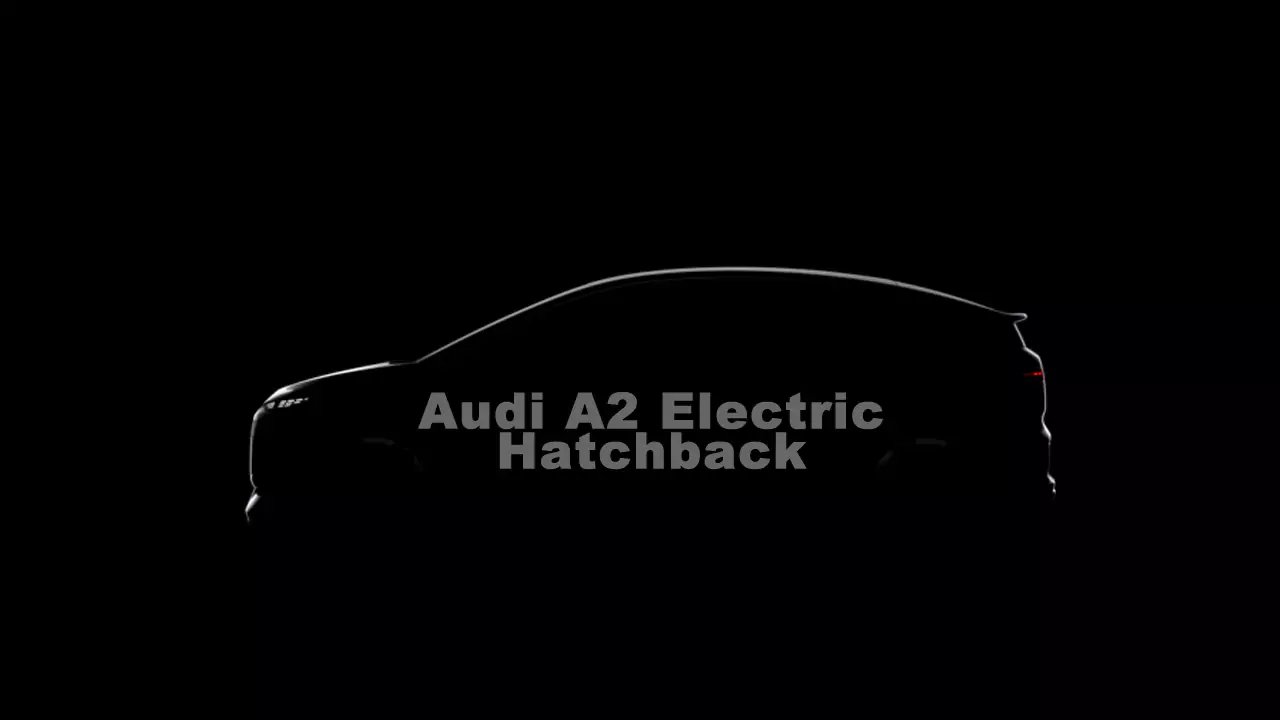
Audi has officially confirmed the return of the iconic Audi A2 nameplate, this time as a fully electric vehicle. After more than two decades, the A2 badge is set to make a comeback in the form of a compact electric hatchback, aimed at making premium EVs more accessible to a wider audience.
The new Audi A2 EV, expected to debut later this year, represents a significant shift in the brand’s strategy as it prepares to replace its current entry-level models, including the Audi A1 and Audi Q2, both of which are likely to be phased out soon.
A Strategic Comeback for the A2 Name
Audi’s decision to revive the A2 name is not just about nostalgia—it is part of a broader plan to expand its electric vehicle lineup into the entry-level premium segment. The announcement was made during the company’s annual media conference, where Audi also revealed a first teaser of the upcoming model.
The original Audi A2, produced between 1999 and 2005, was known for its innovative design, lightweight construction, and impressive efficiency. By bringing back the A2 badge, Audi aims to build on that legacy while adapting it to modern electric mobility needs.
According to Audi CEO Gernot Döllner, the new A2 will focus on practicality, efficiency, and everyday usability. He emphasized that customers today are looking for electric cars that seamlessly fit into their daily lives, rather than just offering high performance or luxury features.
Positioned as an Affordable Premium EV
One of the key highlights of the upcoming A2 EV is its expected pricing. Audi is targeting a starting price of under £30,000, making it one of the most affordable electric vehicles in the brand’s lineup.
This pricing strategy is crucial, as it allows Audi to compete in a segment that is rapidly gaining traction among urban buyers and first-time EV customers. By offering a premium badge at a relatively accessible price point, Audi hopes to attract a broader audience.
The new A2 will be manufactured in Ingolstadt, Germany, which is Audi’s home base and a key hub for its future EV production.
Built on Volkswagen Group’s MEB Platform
The upcoming A2 EV will be based on the Volkswagen Group’s widely used MEB platform, which also underpins models like the Volkswagen ID.3. This platform is designed specifically for electric vehicles and offers flexibility in terms of battery size, performance, and interior space.
Because of this shared architecture, the A2 is expected to have similar dimensions and technical specifications to the ID.3. However, Audi will differentiate the A2 through its design, interior quality, and driving experience.
The use of the MEB platform also helps Audi reduce development costs, which in turn allows the company to price the vehicle more competitively.
Design: A Blend of Hatchback, Crossover, and MPV
While the A2 EV is expected to be positioned as a hatchback, its design will likely incorporate elements from crossovers and MPVs. Spy images of test prototypes suggest a unique profile that combines practicality with modern styling.
The car is expected to feature a slightly raised stance, giving it a crossover-like appearance, along with a spacious cabin that reflects MPV-inspired design principles. This approach aims to maximize interior space while maintaining a compact footprint.
Interestingly, the design is also expected to pay homage to the original A2’s “one-box” silhouette, which was known for its aerodynamic efficiency. Audi engineers are reportedly focusing heavily on aerodynamics to improve range and efficiency, which are critical factors for electric vehicles.
Focus on Efficiency and Practicality
The original Audi A2 was celebrated for its efficiency, thanks to its lightweight aluminium construction and streamlined design. The new A2 EV is expected to carry forward this philosophy, albeit with modern technology.
Although the new model will not use the same aluminium architecture, it will rely on advanced aerodynamics and efficient electric powertrains to deliver strong performance and range.
Audi has stated that the A2 EV will continue the “mission” of the original model, which was to offer a practical, efficient, and innovative solution for everyday mobility.
Replacing A1 and Q2 in the Lineup
The introduction of the A2 EV marks a significant change in Audi’s product lineup. The current entry-level models, the A1 and Q2, are expected to be discontinued in the near future as Audi shifts its focus entirely toward electrification.
This move aligns with the broader industry trend, where automakers are gradually phasing out internal combustion engine (ICE) vehicles in favor of electric alternatives.
By replacing both the A1 and Q2 with a single electric model, Audi aims to simplify its lineup while strengthening its presence in the entry-level EV segment.
Expanding Audi’s EV Portfolio
The A2 EV will play a key role in Audi’s expanding electric vehicle portfolio. While the brand already offers several electric models, most of them are positioned in the higher price range.
With the A2, Audi is taking a step toward democratizing electric mobility, making it more accessible to a wider range of customers. This is particularly important in Europe, where demand for affordable EVs is growing rapidly.
Expected Launch Timeline
The new Audi A2 EV is expected to be officially unveiled in autumn this year. Following its debut, the car will likely go on sale shortly thereafter, with deliveries expected to begin soon after launch.
Given its competitive pricing, practical design, and strong brand appeal, the A2 EV is expected to attract significant interest from buyers.
The return of the Audi A2 as an electric hatchback marks an important milestone in the brand’s journey toward electrification. By combining a familiar nameplate with modern EV technology, Audi is aiming to create a product that resonates with both existing customers and new buyers.
With its affordable pricing, practical design, and focus on efficiency, the new A2 EV has the potential to become a key player in the entry-level premium electric car segment. As competition intensifies, Audi’s strategy of blending heritage with innovation could prove to be a winning formula in the evolving EV market.