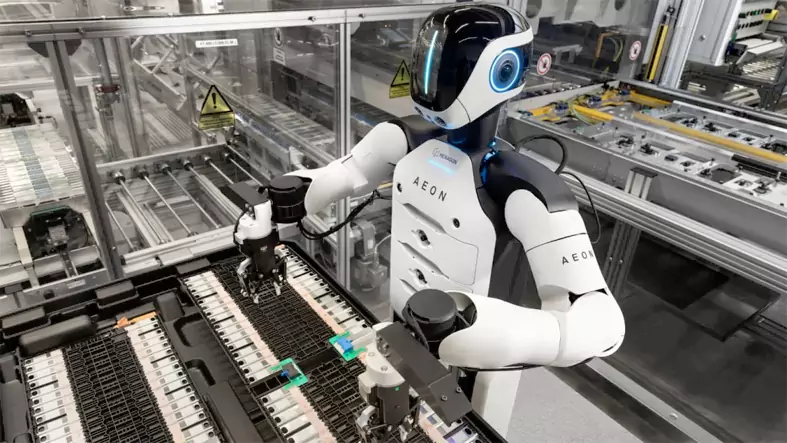
BMW Plans to Deploy Humanoid Robots at German Factory
BMW Group is preparing to enter a new phase of automation by introducing humanoid robots into its vehicle production process for the first time. The initiative highlights the company’s growing focus on combining artificial intelligence with advanced robotics to improve manufacturing efficiency.
The pilot project will begin at BMW’s factory in Leipzig, Germany, where the robots will be tested as part of the company’s “Physical AI” concept.
How the Physical AI System Works
Under the Physical AI framework, BMW plans to combine digital AI agents with physical humanoid robots. These systems will work together to support various tasks in the production line.
Initially, the robots will be tested in areas such as:
-
Serial vehicle production
-
Battery assembly
-
Component manufacturing
The goal is to determine how humanoid robots can assist workers and improve the efficiency of complex manufacturing processes.
Earlier Implementation in the United States
A similar automation approach has already been implemented at BMW’s plant in Spartanburg, South Carolina, United States.
The system operates on a unified IT platform with a standardized data model, allowing AI agents to analyze data and make independent operational decisions within the manufacturing environment.
Robots Will Support, Not Replace Workers
BMW has emphasized that humanoid robots are intended to complement existing automation systems, not replace human employees.
According to the company, the main objectives of the project are to:
-
Improve workplace safety and working conditions
-
Reduce repetitive physical tasks
-
Increase the competitiveness of vehicle production
As automotive manufacturers continue to adopt AI-driven automation, the integration of humanoid robots could become an important step in the evolution of modern car manufacturing.