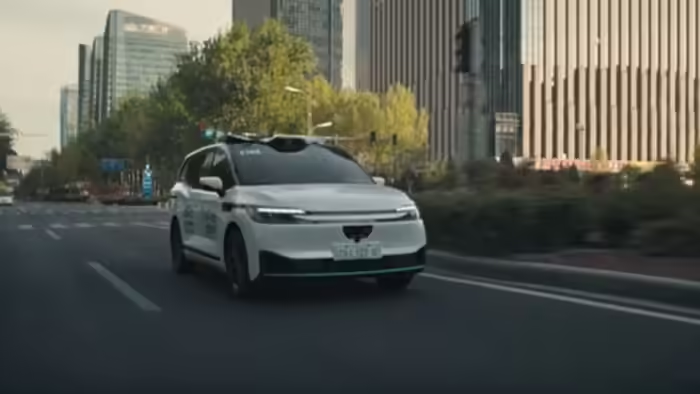
Driverless Cars Malfunction: More than 100 driverless cars in China suddenly stopped on the road due to a technical malfunction, leaving passengers trapped inside. This incident has raised serious concerns about the safety of autonomous vehicles. It highlights how even a small software glitch can create major problems for commuters. Let’s understand the incident in detail.
Robotaxi Malfunction in China
Driverless cars are gaining attention worldwide and are considered a future-ready, economical, and safe mode of transportation. Autonomous vehicles have already been introduced in several cities across the globe. However, a recent incident in China has raised serious questions about their reliability.
In Wuhan, more than 100 robotaxis (driverless taxis) suddenly stopped in the middle of the road due to a major technical fault. Passengers inside the vehicles were left stranded, creating chaos and safety risks on busy roads.

What Happened Suddenly?
According to reports, a pair of Baidu’s Apollo Go driverless taxis stalled around 9 p.m. while in operation. The vehicles suddenly stopped moving in the middle of traffic, putting passengers at risk and creating hazards for vehicles approaching from behind.
Initial investigations by the police suggest that a system malfunction caused the issue. However, detailed findings have not yet been officially released.
What Passengers Experienced
Passengers reported that the vehicle stopped abruptly while in motion. A message appeared on the screen indicating a system malfunction and stating that assistance would arrive within five minutes.
When no help arrived for an extended period, passengers had to press the SOS button and exit the vehicles themselves. In some cases, taxis had stopped on flyovers, where high-speed traffic was moving on both sides, making it extremely dangerous for passengers to step out.
Growing Global Concerns
This is not the first time robotaxis have encountered such failures. Similar incidents have been reported globally. In December 2025, autonomous cars from Waymo in San Francisco stalled due to a sudden power outage. In August 2025, a robotaxi in Chongqing reportedly fell into a construction pit.
Experts believe that while autonomous vehicles can reduce accidents caused by human error, technical failures could introduce a new category of risks that must be carefully managed.
Baidu’s Expanding Robotaxi Network
Wuhan is one of the largest testing hubs for robotaxis in China. Baidu currently operates over 1,000 driverless taxis in the city. The company is planning to expand its services to cities like Abu Dhabi and Dubai, and even into Europe.
Trials are also expected to begin in the UK by 2026. However, this recent incident highlights a critical concern: when deployed at scale, even minor software glitches in driverless systems can disrupt an entire city’s traffic and compromise passenger safety.