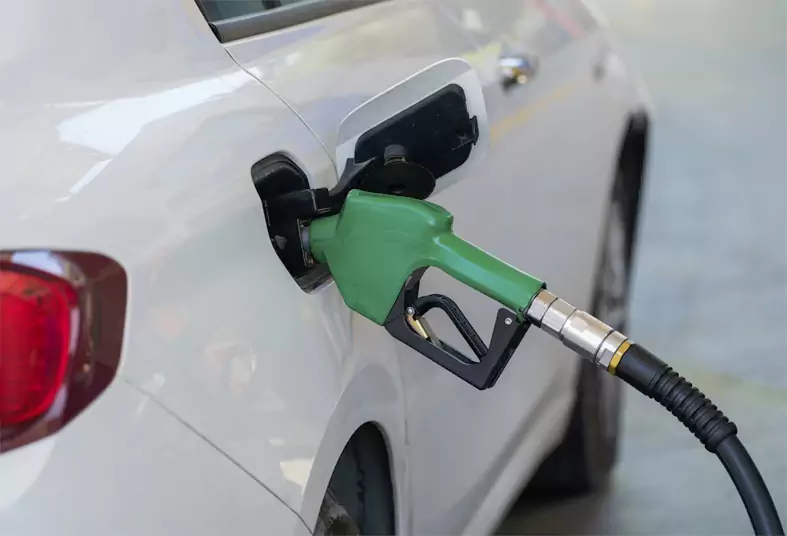
E30 Petrol: The All India Distillers’ Association (AIDA) has urged the government to increase ethanol blending in petrol from 20% to 30%. Additionally, there is growing discussion about exploring ethanol blending in diesel. The government has previously stated that ethanol blending has reduced India’s oil imports by millions of barrels.
Ethanol blending gains importance
Global tensions are rising, oil prices are increasing, and India is looking for ways to protect both its economy and energy needs. In this context, ethanol has once again come into focus.
The All India Distillers’ Association (AIDA) has written to Union Road Transport and Highways Minister Nitin Gadkari, requesting an increase in ethanol blending beyond 20% and a stronger push for flex-fuel vehicles. This highlights that the issue is not just about fuel but also about India’s long-term energy security.
Government’s stance on energy diversification
Amid fluctuating global crude oil prices and tensions in West Asia, India is actively working to diversify its energy sources. On March 23, while addressing the Lok Sabha, Prime Minister Narendra Modi highlighted the benefits of India’s long-term planning.
He stated that over the past 11 years, India has diversified its energy imports significantly. Earlier, crude oil, LPG, and natural gas were imported from 27 countries, whereas now India sources energy from 41 countries.
Speaking about ethanol, he noted that a decade ago only 1–2% ethanol was blended in petrol, whereas today the country has reached 20% blending. This has helped reduce petrol imports by around 45 million barrels annually.
After E20, focus shifts to E30
In its letter, AIDA stated that India has already achieved the 20% ethanol blending target ahead of schedule, thanks to coordinated efforts between the government and industry.
The association is now pushing for a 30% blending target. According to AIDA, this step could significantly reduce crude oil imports, lower foreign exchange expenditure, and provide relief to the economy.
The organization also warned that ongoing tensions in West Asia could lead to a sharp rise in crude oil prices, directly impacting import-dependent countries like India. In such a scenario, ethanol could act as a protective shield for the economy.
Push for flex-fuel vehicles
AIDA has also emphasized the need to promote flex-fuel vehicles. These vehicles can operate on varying levels of ethanol blending, including up to 100% ethanol.
This technology has already been successfully implemented in countries like Brazil. Adopting it in India could ensure consistent demand for ethanol and provide better income opportunities for farmers, especially those cultivating sugarcane.
Expanding ethanol usage beyond vehicles
The association has suggested that ethanol usage should not be limited to automobiles. It also recommends promoting ethanol-based burners and cooking systems for domestic and commercial use.
Such solutions could be particularly useful in rural and semi-urban areas, where traditional fuels like wood are still widely used.
Ethanol blending in diesel
AIDA has also proposed blending ethanol with diesel. If successful, this could reduce diesel costs and expand ethanol usage further.
The government has already taken initial steps in this direction. In August last year, at an event in Pune, Union Minister Nitin Gadkari stated that ethanol is just the beginning. He mentioned that the Automotive Research Association of India (ARAI) is working on isobutanol and experimenting with blending 10% isobutanol in diesel. Additionally, an engine running on 100% isobutanol has been developed in collaboration with Kirloskar.
Future roadmap
AIDA has expressed its intent to meet the government and present a detailed roadmap. This plan will outline how India can meet its energy needs by increasing ethanol usage while moving toward greener and more sustainable energy solutions.
Overall, ethanol is no longer just an alternative fuel—it is becoming a key pillar of India’s energy strategy.