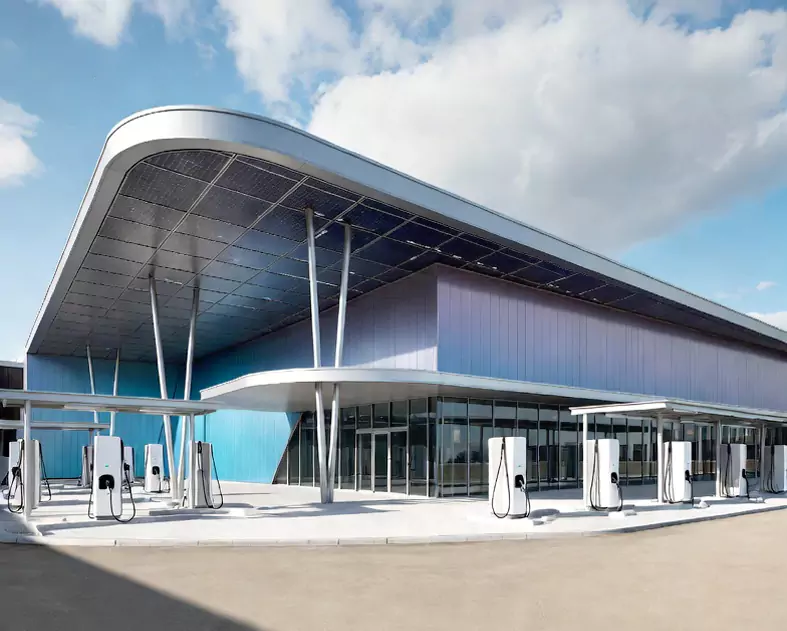
EV Charging Stations Declared ‘De-Licensed’ Activity in India
The central government has reiterated that setting up electric vehicle (EV) charging stations across India is a “de-licensed” activity, meaning individuals, companies, and private players can install such infrastructure without requiring a special license. This clarification comes under the guidelines issued by the Ministry of Power in 2024 and has also been reflected in state-level policies like the Madhya Pradesh Electric Vehicle Policy 2025.
This move is part of India’s broader push to accelerate EV adoption by making charging infrastructure more accessible and scalable. By removing licensing barriers, the government aims to encourage private investment and boost the expansion of charging networks across both urban and rural areas.
However, this policy has recently come under scrutiny following a tragic incident in Indore, where a massive fire—reportedly caused by a short circuit during EV charging—claimed eight lives. The incident has raised serious concerns about safety standards and the regulatory framework governing EV charging infrastructure.
Indore Fire Incident Sparks Safety Debate
The fatal fire in Indore has become a turning point in discussions around EV charging safety. While investigations are ongoing, initial reports suggest that the blaze may have originated from a short circuit while charging an electric hatchback.
This tragedy has drawn attention to a critical issue: despite the rapid growth of EV infrastructure, there are no strict regulatory approvals required before setting up charging stations in some states, including Madhya Pradesh. The absence of mandatory licensing has led to questions about whether safety checks and compliance mechanisms are robust enough to prevent such incidents.
Authorities are now under pressure to ensure that while infrastructure expansion continues, it does not compromise public safety.
What ‘De-Licensed’ Means for EV Charging Infrastructure
The “de-licensed” status essentially means that any individual or organization can establish an EV charging station without obtaining prior government approval. However, this does not imply a complete lack of oversight.
The Ministry of Power’s 2024 guidelines clearly outline technical, safety, and operational standards that must be followed. These guidelines aim to strike a balance between ease of doing business and ensuring safety and reliability in EV charging infrastructure.
Private players are encouraged to adopt Public-Private Partnership (PPP) models, which can help scale up the network faster while maintaining quality standards. This approach is expected to play a crucial role in meeting India’s growing EV demand.
Madhya Pradesh EV Policy 2025 Aligns with Central Norms
The Madhya Pradesh Electric Vehicle Policy 2025 mirrors the central government’s stance by declaring public charging stations (PCS) as a de-licensed activity. The policy allows any individual or entity to set up charging stations, provided they adhere to the prescribed technical standards and performance protocols.
It also mandates that electricity distribution companies (DISCOMs) must provide power connections to EV charging stations as per the MP Electricity Supply Code 2021. This ensures that infrastructure developers do not face hurdles in accessing electricity, which is essential for the smooth functioning of charging stations.
The Urban Development and Housing Department has been designated as the nodal authority for implementing the EV policy in the state, while the MP Power Management Company Limited serves as the nodal agency for charging infrastructure.
Guidelines for Residential and Commercial Charging
The 2024 guidelines provide detailed instructions for setting up EV charging stations in both residential and commercial spaces.
In residential areas, housing societies and resident welfare associations (RWAs) are allowed to install community charging stations. Residents can also set up private charging points in their designated parking spaces. Additionally, community charging stations can be configured to serve visitor vehicles, ensuring flexibility and convenience.
For commercial buildings, owners have the freedom to determine the number and type of charging stations based on employee needs. This is particularly beneficial for workplaces aiming to support employees who use electric vehicles.
These provisions are designed to make EV charging more accessible and adaptable to different user requirements.
Safety Standards and Compliance Requirements
While the activity is de-licensed, safety remains a key focus area. The guidelines emphasize that all EV charging equipment must comply with standards set by the Bureau of Indian Standards (BIS).
Key safety requirements include:
-
Proper electrical cabling and installation practices
-
Compliance with Central Electricity Authority (CEA) regulations
-
Adequate fire protection systems
-
Adherence to technical standards for connectivity and power supply
The guidelines also specify that equipment must meet the CEA’s technical standards for distributed generation (2013) and safety measures for electrical supply (2023), as updated from time to time.
These measures are intended to minimize risks and ensure that EV charging infrastructure operates safely under all conditions.
Role of Key Authorities in Monitoring
To ensure effective implementation, the Bureau of Energy Efficiency (BEE) has been designated as the central nodal agency for monitoring EV charging infrastructure across the country.
BEE works in coordination with multiple agencies, including:
-
Central Electricity Authority (CEA)
-
State governments
-
Electricity distribution companies (DISCOMs)
These organizations are responsible for ensuring compliance with standards, facilitating infrastructure development, and addressing operational challenges.
This multi-agency approach is crucial for maintaining consistency and accountability in the rapidly evolving EV ecosystem.
EV Charging Infrastructure in India: Current Status
According to the central government, India currently has 29,151 EV charging stations. While this number reflects steady growth, the distribution remains uneven across states.
Madhya Pradesh, for instance, has only 1,146 charging stations, indicating significant room for expansion. The de-licensed policy is expected to encourage more private players to enter the market and bridge this gap.
As EV adoption continues to rise, the demand for reliable and widespread charging infrastructure is expected to grow exponentially. Ensuring that this growth is both rapid and safe will be critical for the long-term success of India’s EV transition.
Balancing Growth and Safety
The government’s decision to keep EV charging stations de-licensed is aimed at promoting faster infrastructure development. However, the Indore incident has highlighted the importance of strict adherence to safety standards.
Going forward, authorities may need to strengthen enforcement mechanisms and conduct regular inspections to ensure compliance. Public awareness about safe charging practices will also play a key role in preventing accidents.
The challenge lies in maintaining a balance between encouraging investment and ensuring that safety is not compromised.
India’s push towards electric mobility is gaining momentum, and the de-licensed status of EV charging stations is a significant step in that direction. By simplifying the setup process, the government has opened the door for widespread private participation.
However, recent incidents like the Indore fire serve as a reminder that rapid growth must be accompanied by robust safety measures. As policies evolve, a stronger focus on compliance, monitoring, and public safety will be essential.
With the right balance, India can build a reliable and secure EV charging network that supports its ambitious clean mobility goals.