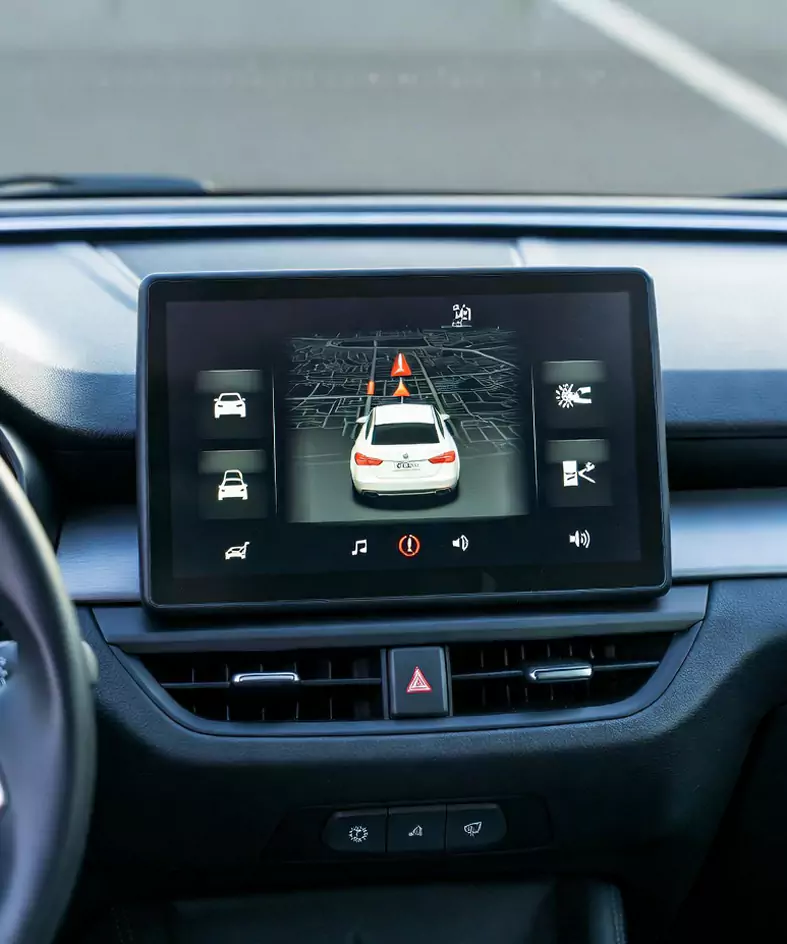
ADAS could make vehicles markedly safer nationwide, but rollout will be gradual and adaptive. Automakers now offer a wider range of safety features. Beyond airbags, cameras, and basic sensors, Advanced Driver Assistance Systems (ADAS) are increasingly common — once a luxury-only option.
Features such as adaptive cruise control, automatic emergency braking, and lane-keeping assist are progressively appearing in mainstream models. Manufacturers say ADAS can significantly reduce collisions.
For India, where road safety is a major challenge — with over 150,000 road accidents reported annually — ADAS adoption could have a substantial impact. Historically, safety efforts focused on passive measures such as airbags, crash structures, and Bharat NCAP ratings. ADAS, however, are active systems designed to prevent accidents before they occur.
Most ADAS technologies were developed and validated in countries with well-marked roads and predictable traffic behavior. Indian roads present a very different set of conditions: dense, mixed traffic, inconsistent lane markings, and unpredictable driving patterns. These differences mean ADAS must be specifically tested and calibrated for local use.
To address this, the Automotive Research Association of India (ARAI) has opened the country’s first dedicated ADAS test city near Pune, on a 20-acre campus in Takve, Talegaon. Launched at The ADAS Show, the facility recreates Indian urban conditions with simulated intersections, complex lane-change scenarios, and specialized testing equipment. Its purpose is to help automakers validate and tune ADAS features for real-world Indian conditions.
ARAI Director Dr. Reji Mathai highlighted the need for an indigenous ADAS testing ecosystem and the role of data and AI in developing autonomous systems. He noted that India’s participation in international regulatory discussions aids understanding of global adoption pathways. Dr. Mathai emphasized that the aim is measurable safety outcomes, not just regulations — and that the ADAS test city is designed to enable those outcomes by replicating real-world scenarios in a controlled environment.