Breakthrough in Battery Tech: New Lithium-Air System Could Boost EV Range 10x
Scientists are on the verge of developing a next-generation battery technology that could transform the electric vehicle (EV) industry. Known as Lithium-air battery, this innovation has the potential to deliver energy density up to 10 times higher than conventional lithium-ion batteries.
What Makes Lithium-Air Batteries Special?
Lithium-air batteries use oxygen from the air as a key reactant, allowing them to store significantly more energy compared to traditional batteries. This makes them a promising solution for long-range electric vehicles.
However, the technology has faced major challenges, including:
- Low efficiency
- Rapid degradation
- Limited charging cycles
New Breakthrough Using Advanced Material
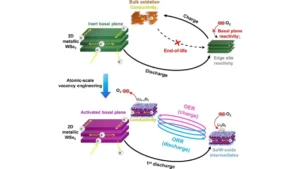
Researchers have now developed a new approach using Tungsten diselenide (WSe₂), a material that typically underperforms due to inactive surface areas.
By:
- Adding platinum atoms
- Creating microscopic structural defects
Scientists were able to activate almost the entire surface of the material. This significantly improves its interaction with oxygen, which is crucial for lithium-air battery operation.
Improved Performance and Durability
The new design has led to major performance improvements:
- Faster charging and discharging
- Higher energy capacity
- Enhanced stability
Most notably, the prototype battery achieved over 550 charge cycles, even under high load conditions—far better than earlier lithium-air systems, which degraded quickly.
What This Means for Electric Vehicles
If successfully commercialized, this technology could:
- Increase EV driving range dramatically
- Reduce battery costs over time
- Improve durability and lifespan
This could make electric vehicles more practical, affordable, and efficient, accelerating global EV adoption.
Conclusion
The latest advancements in lithium-air battery technology mark a significant step toward the future of energy storage. While still in the research phase, this breakthrough could eventually redefine the EV market, offering longer range and better performance than ever before.