
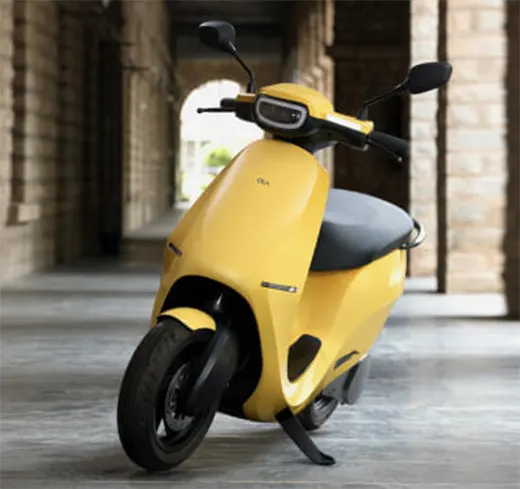

Ola Electric‘s position in the Indian electric two-wheeler segment has weakened significantly. To boost its sales, the company has launched an upgrade program. Founder and CEO Bhavish Aggarwal announced this program for owners of its Gen 1 and Gen 2 scooters and bikes.
Ola Electric’s position in the Indian electric two-wheeler segment has weakened significantly. To boost its sales, the company has launched an upgrade program. Founder and CEO Bhavish Aggarwal announced this program for owners of its Gen 1 and Gen 2 scooters and bikes who are interested in the new Gen 3 model. On his personal social media platform, he wrote that existing customers in Bengaluru will be the first to benefit from this scheme, which will begin this weekend.
We're launching an upgrade program for our Gen 1 and Gen 2 customers to move to our latest Gen 3 products, both scooters and bikes and the 4680 versions too!
It starts in Bengaluru this weekend!
— Bhavish Aggarwal (@bhash) February 20, 2026
However, he did not share pricing details, including when, where, and how the upgrade scheme will be offered. The upgrade program covers Ola Electric’s Gen 3 models, such as the S1 Pro, S1 Pro+, and S1X Gen 3 electric scooters, and the Roadster, Roadster X, and Roadster X+ electric motorcycles. He confirmed that variants using Ola’s in-house 4680 “Bharat Cell” batteries are also covered under the upgrade scheme.
Current prices for the Gen 3 models start at ₹82,999 (ex-showroom, after subsidy, including charger and Move OS+ lifetime subscription) for the S1 X 2kWh variant and go up to ₹1,89,999 (ex-showroom, including charger and Move OS+ lifetime subscription) for the Roadster X+ 9.1kWh variant. Some Ola Electric models have qualified for the Indian government’s PM E-Drive production-linked incentive scheme, which provides buyers with a subsidy on the final purchase price.
Poor service continues to cause sales to decline
In the company’s latest earnings call last week, Ola Electric CFO Deepak Rastogi acknowledged that customer confidence has declined due to an “execution gap” related to customer service complaints, particularly poor turnaround times. Aggarwal also posted a shareholder letter on his social media on February 13, stating that Q3 FY26 marked a structural reset for Ola Electric and citing service execution as the company’s biggest challenge. Service backlogs have now been reduced by approximately 50%, and about 80% of service requests are completed within a day.
Ola’s market share drops to 16%
Ola Electric is reducing operating costs across its business and this week also announced that it will further reduce its offline retail footprint across India to just 550 locations as part of a structural reset, down from nearly 4,000 stores at the company’s peak. Ola Electric, which previously led the electric scooter market, has seen its market share drop from 36.7% in 2024 to 16.1% by the end of 2025. Annual sales in calendar year 2025 are projected to be just 196,767 units, while competitors TVS Motor Company, Bajaj Auto, and Ather Energy have strengthened their positions.