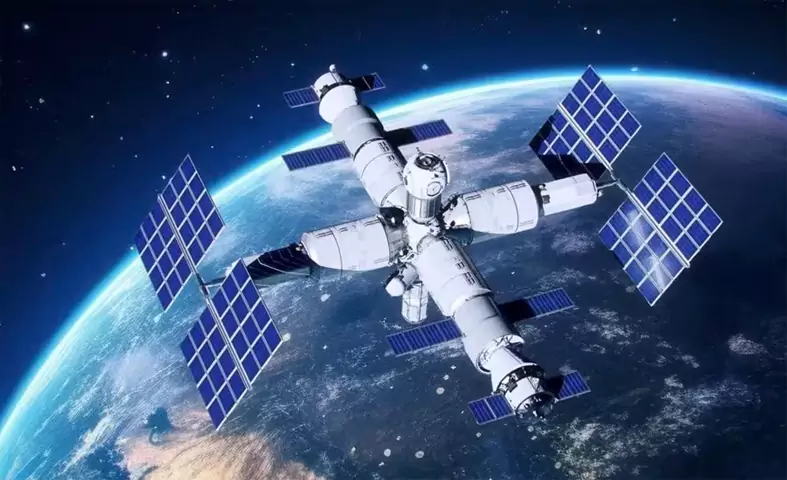
Russia Developing Ground Infrastructure for New Russian Orbital Station (ROSS) –
Russia is moving forward with plans to build the Russian Orbital Station (ROSS) by creating a dedicated ground infrastructure for its control and operation. The work is being carried out by Russian Space Systems (RSS), which is developing systems to manage the station once it is launched into orbit.
The future space station modules are expected to be launched using the Angara-A5M, an upgraded version of Russia’s Angara rocket family.
Nationwide Network of Ground Stations
According to RSS, the ground segment for the Russian Orbital Station will include a new network of antennas and technical equipment installed at command and measurement stations across Russia.
These stations will stretch from Kaliningrad in western Russia to Kamchatka Peninsula in the far east, ensuring constant communication and control of the station while it orbits Earth.
Support From Major Spaceports
The launch of station modules and other spacecraft components will be supported by RSS systems at two major Russian spaceports:
-
Baikonur Cosmodrome
-
Vostochny Cosmodrome
In addition, a new en-route measurement station will be established on Sakhalin Island along the Amur launch trajectory, which will help track rockets and collect data during launches.
New Command and Measurement Technology
RSS is also developing a new generation of unified command and measurement stations equipped with advanced technical systems.
These stations will be deployed across Russia to provide continuous information support, monitoring, and control of spacecraft connected to the Russian Orbital Station.
To strengthen communications further, the antenna complex of the Luch relay satellites will also be upgraded.
Angara-A5M Rocket to Launch Station Modules
The modules of the Russian Orbital Station, along with manned transport spacecraft, will be launched using the Angara-A5M rocket.
To support these launches, RSS will modify the hardware and software of measurement systems at both Baikonur and Vostochny cosmodromes to ensure compatibility with the new rocket.
Construction Expected to Begin in 2028
Once the Russian software systems and technical documentation are completed, RSS specialists will integrate all components into a single unified control complex.
According to the plan, this integrated infrastructure will allow construction and deployment of the Russian Orbital Station to begin in 2028, marking an important step for Russia’s future space exploration programs.