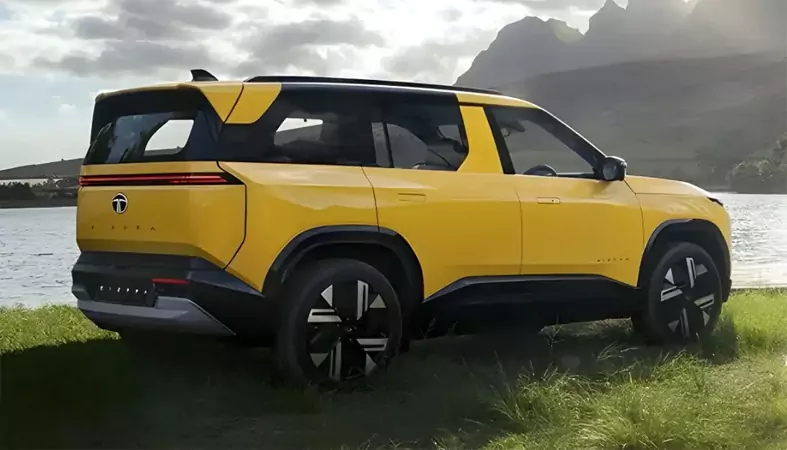
Tata Motors revived the iconic Tata Sierra in November 2025 with a completely new design and updated engine options, marking one of the most anticipated launches in India’s SUV market. While the company disclosed most of the vehicle’s specifications during its unveiling, it notably withheld one critical detail—official fuel efficiency figures certified by the Automotive Research Association of India (ARAI). This omission led to widespread speculation, especially after Tata revealed an eye-catching mileage claim during controlled testing.
During a controlled test conducted at NATRAX (National Automotive Test Tracks), Tata reported that the Sierra’s new 1.5-litre TGDi Hyperion turbo petrol engine achieved an impressive fuel efficiency of 29.9 kmpl. This figure attracted significant attention as it surpassed even the claimed mileage of several hybrid vehicles in the Indian market. However, the absence of an official ARAI-certified number raised questions about the real-world viability of such a claim.
Clarity has now emerged through an RTI (Right to Information) response obtained from Automotive Research Association of India, which was shared by Vahan Warta on social media. According to the official certification data, the 1.5-litre TGDi Hyperion turbo petrol engine delivers a fuel efficiency of 13.5 kmpl—significantly lower than the previously claimed figure. Meanwhile, the 1.5-litre Kryojet diesel engine has been rated at 18.8 kmpl, offering better efficiency compared to its petrol counterpart.
These figures highlight the stark difference between controlled test results and standardized certification processes. Controlled environments, such as those at NATRAX, often simulate ideal driving conditions that are difficult to replicate in real-world scenarios. In contrast, ARAI testing follows standardized protocols designed to reflect more realistic driving patterns, making its figures a more reliable benchmark for consumers.
Interestingly, the naturally aspirated 1.5-litre petrol variant of the Sierra has not yet received ARAI certification, leaving a gap in the official data for prospective buyers. The certification timeline also reveals that the diesel variant was approved on 21 November 2025, while the turbo petrol variant received its certification on 11 December 2025—both dates closely aligned with the vehicle’s launch period.
Despite the discrepancy in mileage figures, the Tata Sierra has witnessed strong market traction. The company has already reported deliveries exceeding 10,000 units since customer deliveries began on 15 January 2026. Even before deliveries commenced, the SUV generated massive interest, crossing 70,000 bookings within just 24 hours of opening reservations and eventually surpassing the 1 lakh mark. This overwhelming response underscores the enduring appeal of the Sierra brand and the strong demand for feature-rich SUVs in India.
Currently priced at ₹11.49 lakh (ex-showroom), the Sierra is positioned in one of the most competitive segments of the Indian automotive market. It competes with established and popular models such as the Hyundai Creta, Kia Seltos, Maruti Suzuki Grand Vitara, Toyota Urban Cruiser Hyryder, Honda Elevate, and the newly introduced Renault Duster. This segment is known for intense competition, where factors such as pricing, features, performance, and fuel efficiency play a crucial role in influencing buyer decisions.
Tata Motors is actively working to scale up production to meet the growing demand for the Sierra. The SUV is currently being manufactured at the company’s Sanand facility, alongside the popular Nexon. Production capacity is expected to increase to approximately 15,000 units per month in the coming months, which should help reduce waiting periods and improve availability for customers.
In addition to its internal combustion engine (ICE) variants, Tata Motors is also preparing to expand the Sierra lineup with an electric version. The Tata Sierra EV is expected to launch by June 2026, aligning with the company’s broader strategy to strengthen its presence in the electric vehicle segment. The introduction of the EV variant could further boost the model’s appeal, especially among environmentally conscious buyers and those seeking lower running costs.
The Sierra’s strong initial performance in the market, despite the controversy surrounding its mileage claims, suggests that buyers are prioritizing factors beyond fuel efficiency. Design, brand legacy, feature offerings, and the promise of future-ready options such as electrification are playing a significant role in shaping consumer preferences.
However, the discrepancy between claimed and certified mileage figures serves as an important reminder for buyers to rely on standardized data when evaluating vehicle efficiency. While controlled test results can showcase a vehicle’s potential under ideal conditions, real-world performance is often closer to officially certified figures.
In conclusion, the return of the Tata Sierra marks a significant milestone for Tata Motors, blending nostalgia with modern technology and design. While questions around fuel efficiency have sparked debate, the SUV’s strong sales momentum and upcoming EV variant indicate a promising future. As production ramps up and more variants enter the market, the Sierra is poised to remain a key contender in India’s highly competitive SUV segment.