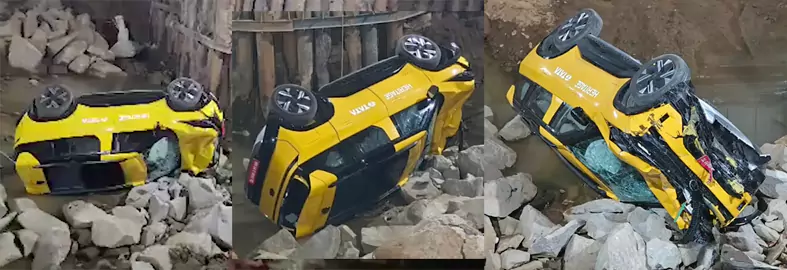
A Tata Sierra SUV plunged into a 20‑foot‑deep construction pit during a test drive in Thane, Maharashtra. Video of the incident has gone viral, showing the yellow SUV overturned in the excavated pit. Rescue crews used a crane to recover the vehicle. Remarkably, all occupants survived with only minor injuries.
What happened
According to local reports, a customer was test‑driving the Tata Sierra when the vehicle lost control. It struck multiple parked cars, broke through the construction‑site barricades and fell into the pit, where it rolled over. The crash caused heavy damage to the vehicle, but nobody inside suffered life‑threatening injuries.
Safety systems likely prevented serious harm
All six airbags deployed during the accident, and occupants are believed to have been wearing seat belts — factors credited with preventing major injuries. The Sierra’s restraint systems appear to have operated as designed, cushioning occupants during the rollover and impact.
Tata Sierra’s safety credentials
The Tata Sierra is a recently launched mid‑size SUV in India that packs a broad safety suite. Standard equipment includes six airbags, Electronic Stability Program (ESP), rollover mitigation, cornering stability, and disc brakes on all four wheels. Higher trims offer Level‑2 ADAS features such as automatic emergency braking, lane‑keep assist and adaptive cruise control. It is not yet clear whether the crashed vehicle had ADAS active during the test drive; if it had been engaged, it might have prevented or reduced the severity of the collision.
Build quality and crashworthiness
The Sierra has not yet received an official Bharat NCAP or Global NCAP rating, but the manufacturer has stated the model is engineered to aim for a five‑star result. The fact that all occupants walked away from a 20‑foot fall is being cited as circumstantial evidence of strong structural integrity, though formal crash test data is still pending.
Next steps and safety reminders
Authorities and the dealership are investigating the cause of the loss of control. For drivers and test‑drive customers, this incident underscores two key safety practices: always wear seat belts and confirm active safety systems (like ADAS) are enabled when available.