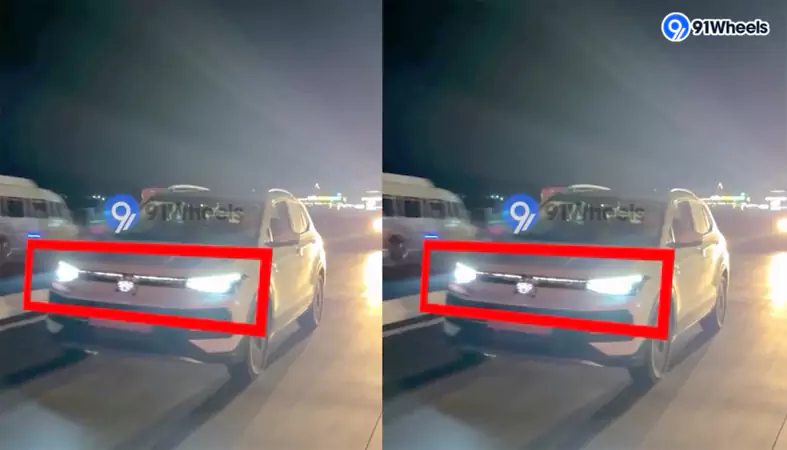
Volkswagen’s Taigun facelift has been caught largely undisguised in recent night‑time tests, revealing a comprehensive front‑end overhaul and several cues that point to notable feature upgrades. The spy shots give a clear look at the refreshed fascia, new lighting signature and subtle rear changes, while insiders and supply‑chain traces suggest the model could also gain an Aisin‑sourced 8‑speed torque‑converter automatic and enhanced cabin equipment.
Exterior: sharper face, illuminated badge The most striking change up front is a sleeker grille treatment flanked by reworked LED headlamps and LED daytime running lights. A thin LED strip appears to link the lighting elements across the nose, creating a cleaner, more modern signature at night. Spy images also show an illuminated Volkswagen badge — a growing trend in global VW products — which elevates the Taigun’s road presence, particularly in urban settings.
The bumper has been redesigned for a neater appearance with reduced chrome and a smoother silver skid plate. Side profile cues remain largely unchanged, but the test mule hints at new alloy wheel designs. Conventional door handles, body‑coloured ORVMs, blacked‑out B‑pillars, roof rails and a shark‑fin antenna appear carried over, preserving the Taigun’s familiar silhouette while modernizing key surfaces.
Rear: subtle refresh, possible full‑width LED At the rear, the Taigun shows refreshed tail‑lamp graphics. While the test vehicle retains much of the existing interconnected lighting housing, camouflage between the taillamps suggests VW may be hiding a thicker full‑width LED strip or even an illuminated red VW badge set into the tail. The bumper has been simplified with vertically positioned reflectors replacing the outgoing model’s horizontal units — a small but tidy visual update consistent with the facelift theme.
Interior and features: tech and comfort gains likely Inside, the facelift is expected to bring material and tech upgrades aimed at keeping the Taigun competitive in the sub‑4.5‑metre SUV segment. Rumours point to new upholstery and interior colour themes, a 10.25‑inch digital cockpit and a larger central touchscreen. Volkswagen may also add comfort features such as rear‑seat massage and a panoramic sunroof — amenities increasingly common in rival offerings and valuable for showroom appeal.
Powertrain: Aisin 8‑speed for the 1.0 TSI, 1.5 TSI unchanged Mechanically, VW will likely retain the current engines but refine transmission choices. The 1.0‑litre turbo petrol, which makes 115 PS and 178 Nm, is expected to be offered with a new Aisin 8‑speed torque‑converter automatic in place of the outgoing 6‑speed torque‑converter unit, while the 6‑speed manual will remain. The higher‑output 1.5‑litre turbo (150 PS, 250 Nm) should continue with the 7‑speed DSG; Volkswagen has reportedly discontinued the 6‑speed manual for the 1.5‑litre as of January 2026 to streamline offerings.
Market positioning and rivals The Taigun facelift is slated for launch later this year and will continue to square off against an increasingly busy compact‑SUV field. Fresh rivals and recent launches — including the Maruti Victoris, Tata Sierra and forthcoming Renault Duster and Nissan Tekton — have intensified competition in the 4.2m–4.5m SUV bracket. With rivals adding features and competitive pricing, VW’s mid‑cycle refresh aims to sharpen the Taigun’s equipment list and visual appeal to retain showroom relevance.
What the updates mean
- Styling: The illuminated logo and updated LED signatures modernise the Taigun’s look without a wholesale redesign, helping VW maintain continuity while offering a fresher day‑to‑day presence.
- Equipment: A larger infotainment screen, digital cockpit and panoramic sunroof would align the Taigun with segment norms, boosting its consideration score among buyers valuing tech and perceived premium touches.
- Performance and drivability: The move to an 8‑speed Aisin automatic for the 1.0‑litre engine is aimed at smoother shifts and better refinement; it also positions the Taigun favourably against rivals that offer more polished torque‑converter units.
- Competitive dynamics: As compact SUVs become feature‑heavy, mid‑cycle facelifts are increasingly pivotal for retaining buyer attention. VW’s tweaks appear calibrated to preserve Taigun’s strengths — interior space and brand cachet — while addressing areas that influence purchase decisions, like cabin tech and premium touches.
Timing and outlook Spy shots and component supplier indicators point to a launch later this year. The facelift should be enough to sustain the Taigun’s competitiveness through the product cycle, but pricing, feature parities and powertrain calibration will determine whether VW can fend off both domestic challengers and new global entrants. Watch for VW to highlight the illuminated badge, lighting signature and transmission upgrade in launch communications to draw attention to the most tangible improvements.