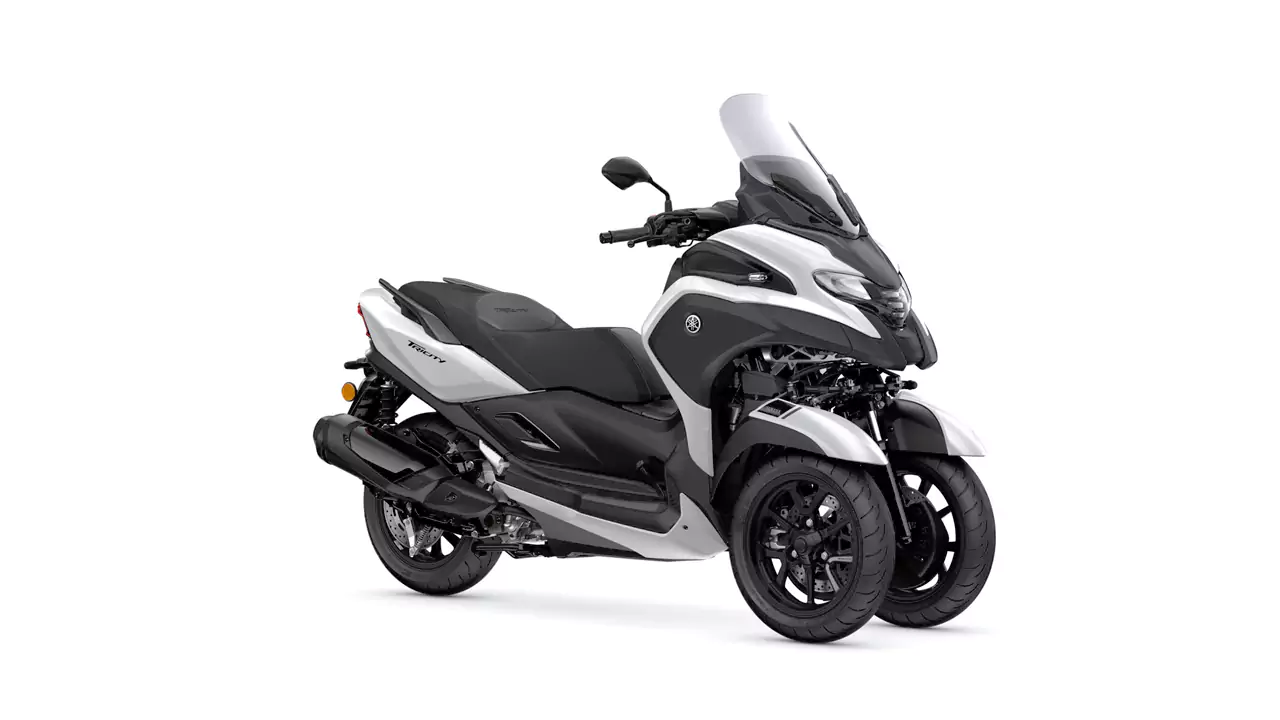
- A major leap in two-wheeler safety: Yamaha Motor and global automotive safety giant Autoliv have jointly developed an airbag system for the 2026 Yamaha Tricity 300 scooter. This marks one of the very few times in history that an airbag has been built directly into a scooter’s body — rather than worn by the rider as a jacket or vest.
- Who is Autoliv? Autoliv is one of the world’s leading automotive safety systems suppliers, best known for developing airbags and seatbelts for cars. Their involvement in two-wheeler safety signals that the industry is increasingly serious about protecting riders on the road.
- Not their first rodeo with scooter airbags: This isn’t Autoliv’s first attempt at scooter airbag technology. The company had previously collaborated with the Piaggio Group to develop a similar system for the Piaggio MP3 three-wheeled scooter. However, that project never reached mass-market production — making the Yamaha Tricity 300 a potentially historic step forward.
- Where exactly is the airbag located? The airbag system is smartly integrated into the inside of the front apron of the Tricity 300. In the event of a frontal collision, the airbag deploys directly in front of the rider, helping to absorb impact and reduce injury risk — similar in concept to how a car’s airbag protects its occupants.
- Designed for real-world riding: Autoliv emphasised that the system was developed with everyday usability as a top priority. The airbag setup has been carefully engineered to preserve the scooter’s natural balance, protect under-seat storage space, and ensure that the overall riding experience remains unaffected when the airbag is not deployed.
- Thoroughly tested and validated: The airbag system has gone through rigorous development and safety validation, including advanced computer simulations and full-scale crash testing, all consistent with applicable international development standards. Riders and buyers can expect a system that has been put through its paces before reaching production.
- A rare feature in the motorcycle world: Vehicle-integrated airbag systems are extremely uncommon on two- and three-wheelers. Outside of wearable airbag jackets and vests, the only notable production example of a bike with a built-in airbag is the Honda Gold Wing Tour — a large luxury touring motorcycle. The Tricity 300 would join that very exclusive club.
- What the CEO had to say: Autoliv’s President and CEO, Mikael Bratt, called the project a significant step beyond their core automotive business. He highlighted that motorcyclists and scooter riders have traditionally had far less passive safety protection compared to car occupants, and that this collaboration represents a meaningful effort to change that reality.
- Already listed in Europe: The Yamaha Tricity 300 with the airbag system has already been listed on Yamaha’s European website, signalling that a market launch is imminent. While pricing details are yet to be announced, the scooter is expected to go on sale in the first half of 2026.
- An interesting question about three-wheelers: The fact that both of Autoliv’s scooter airbag collaborations — with Piaggio and now Yamaha — involve three-wheeled platforms raises an intriguing question: Is airbag technology simply more practical and easier to implement on three-wheelers due to their inherently greater stability and structural space? It’s a point worth watching as this technology evolves.
- Why this matters for everyday commuters: The Yamaha Tricity 300 is not a niche or premium machine — it is a practical, urban-focused three-wheeled maxi-scooter aimed at everyday commuters. If a mass-market model like this can successfully integrate an airbag system, it could pave the way for broader adoption across the two-wheeler segment globally.
- The bigger picture for rider safety: Road accident statistics consistently show that powered two- and three-wheeler riders are among the most vulnerable road users. Innovations like the Tricity 300’s integrated airbag could represent a turning point in how the industry approaches passive safety for riders — much like how airbags transformed car safety in the 1980s and 1990s.