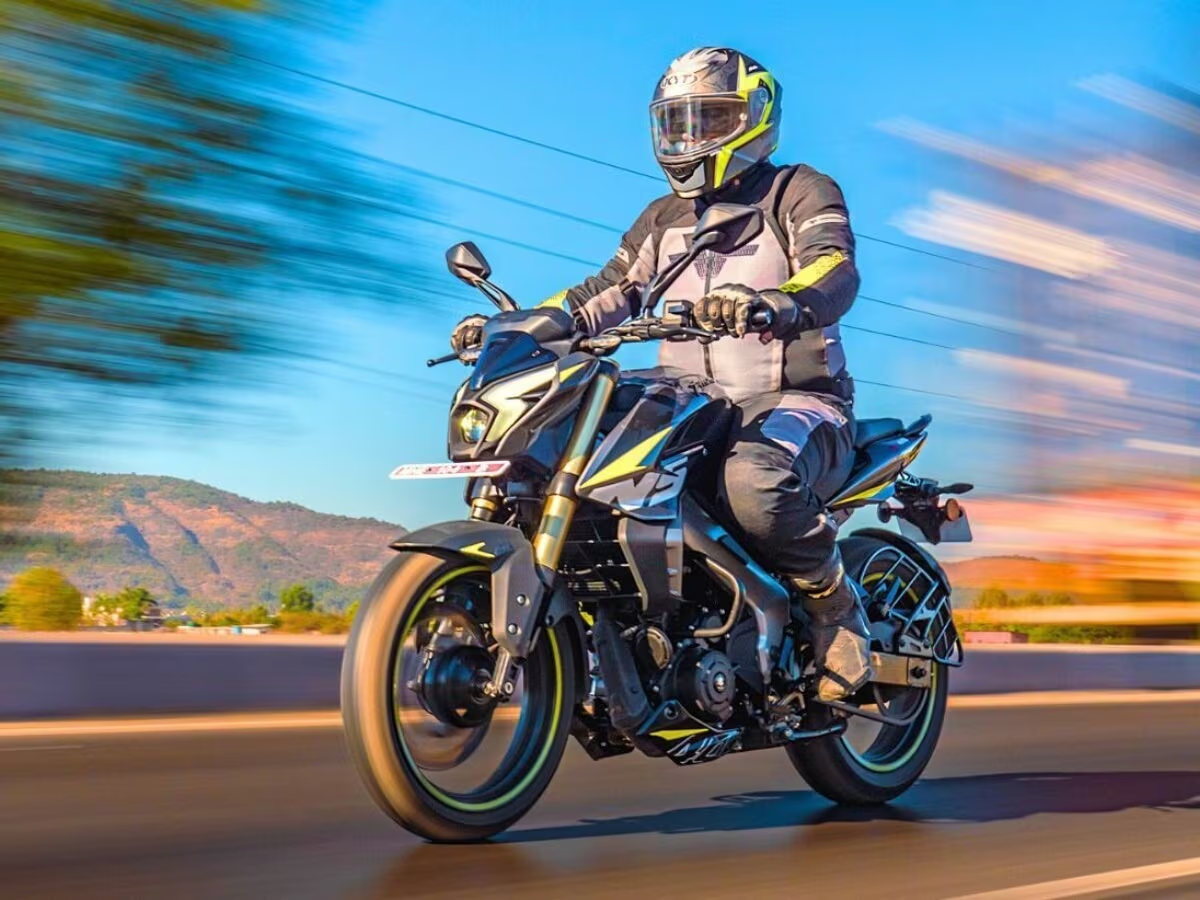
Bajaj Pulsar NS400Z Updated with 350cc Engine to Benefit from New GST Rules
Bajaj Auto has quietly updated its flagship Bajaj Pulsar NS400Z at its Chakan plant by introducing a smaller 350cc engine. This move allows the motorcycle to benefit from the revised GST structure, where bikes up to 350cc attract a lower tax rate of 18%.
Under the new GST 2.0 regime, motorcycles with engine capacities above 350cc now attract a higher tax rate of 40%, up from 28% earlier. As a result, 400cc motorcycles have become more expensive, prompting manufacturers to rethink their engine strategies.
GST Impact on Two-Wheeler Segment
The updated GST rules have significantly impacted the two-wheeler industry. Bikes with engines up to 350cc are now more affordable, while those above this threshold have become costlier.
To adapt, Bajaj has been gradually updating its lineup. The company first revised models like the Triumph 400, followed by the Bajaj Dominar 400 and the KTM 390. Now, the Pulsar range has also received similar updates.
No Change in Price (Yet)
Despite the engine change, Bajaj has not altered the price of the Bajaj Pulsar NS400Z, which continues to be listed at ₹1.94 lakh (ex-showroom).
The company has not officially commented on the pricing strategy. However, it is believed that Bajaj chose not to increase prices when the new GST rules came into effect in September 2025, which may explain the current pricing approach.
New Engine Specifications
The updated Pulsar NS400Z is now powered by a 349.13cc, liquid-cooled, single-cylinder engine that produces:
- 40 bhp at 9,000 rpm
- 33.2 Nm of torque at 7,500 rpm
This engine is similar to the one used in updated models like the Bajaj Dominar 400 and motorcycles from the KTM 390 and Triumph 400 lineup.
Compared to the earlier 373cc engine, which produced 42 bhp and slightly higher torque, the new unit delivers marginally lower output. Additionally, peak power now arrives 200 rpm later, while peak torque is delivered around 1,000 rpm later.
Engine Tuning and Changes
The revised 349cc engine appears to be tuned for improved top-end performance, whereas the earlier 373cc unit offered a broader power band.
Bajaj has reduced engine capacity from 373.27cc to 349.13cc by shortening the stroke. The stroke now measures 56.1 mm, compared to 60 mm earlier, while the bore remains unchanged at 89 mm—similar to the configuration used in the Dominar 400.
What This Means for Buyers
With this update, Bajaj aims to strike a balance between performance and affordability. By bringing the engine capacity below 350cc, the company ensures lower taxation while still offering strong performance in the segment.
However, enthusiasts may notice the slight drop in power figures compared to the earlier version.