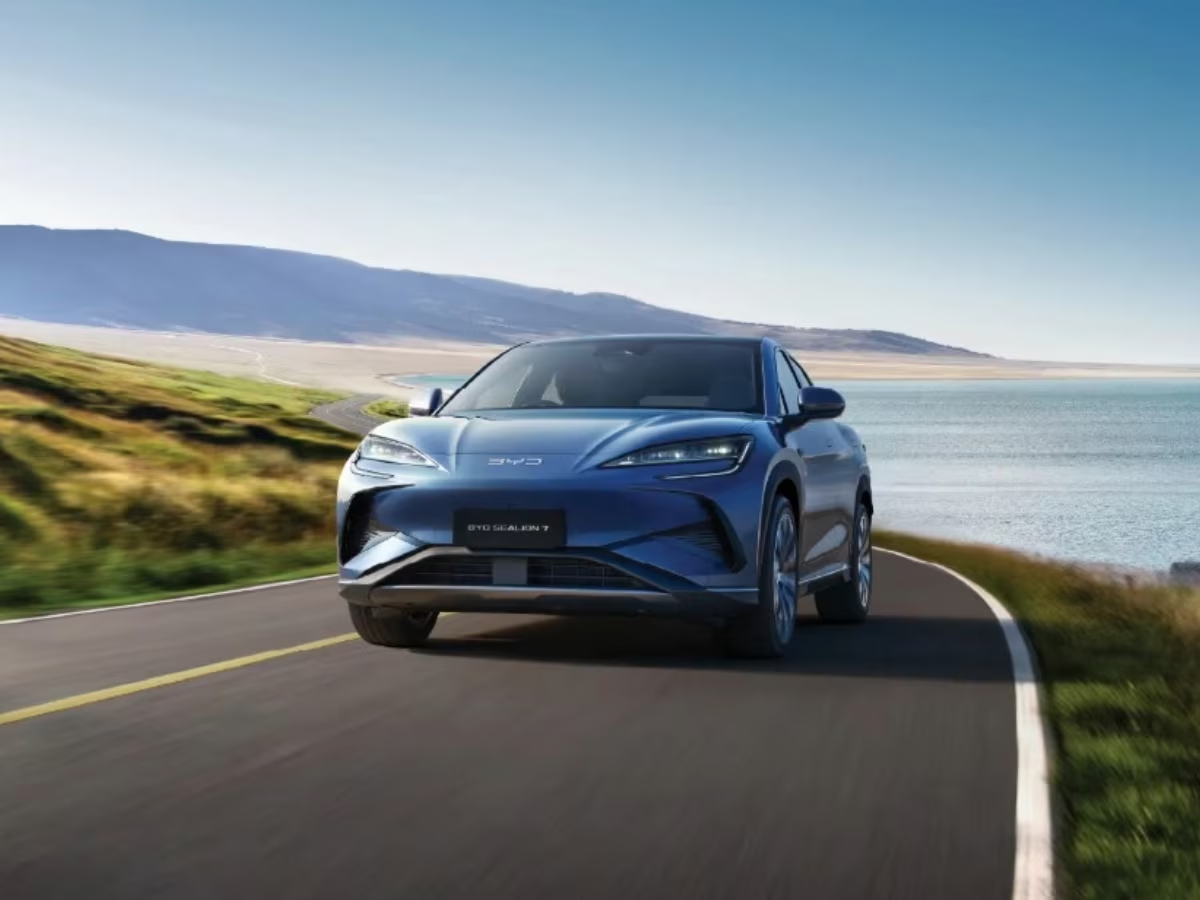
BYD Cars to Get Costlier by Up to ₹1.7 Lakh from May 2026
You may have to spend up to ₹1.7 lakh more to buy a BYD car, as the company has announced a price hike effective May 1, 2026. Following this revision, its products will become 2–3 percent more expensive.
Automakers across the industry are increasing prices, and BYD India has joined the trend. The company confirmed that prices of all its models will rise from May 1, 2026. The increase will range between ₹50,000 for entry-level models and up to ₹1.7 lakh for high-end models, depending on the variant. Earlier this year, BYD had already increased prices of the Sealion 7 in January, and now the revision applies across its entire lineup.
Strait of Hormuz Driving Cost Pressure
One of the key reasons behind the price hike is the ongoing geopolitical tensions in the Middle East, particularly around the Strait of Hormuz. This region plays a crucial role in global supply chains and logistics.
Rising disruptions have significantly increased the cost of raw materials such as aluminum and petroleum coke. Petroleum coke is essential for producing synthetic graphite, a key component in electric vehicle batteries. For an EV-focused brand like BYD, these rising input costs directly impact vehicle pricing.
Expected Price Hike Across Models
According to a report by Autocar India, the expected price increases are:
- BYD Atto 3: ₹50,000 to ₹1 lakh increase
- BYD eMAX 7: ₹55,000 to ₹59,000 increase
- BYD Seal: ₹80,000 to ₹1.6 lakh increase
- BYD Sealion 7: ₹99,000 to ₹1.65 lakh increase
The company is expected to announce exact revised prices soon.
Other Automakers Also Increase Prices
Several other manufacturers have also announced price hikes. Hyundai has increased prices by up to 1 percent across its range starting May. Meanwhile, Tata Motors Passenger Vehicles has already implemented a marginal price hike across its ICE models from April 1, 2026, citing rising input costs.