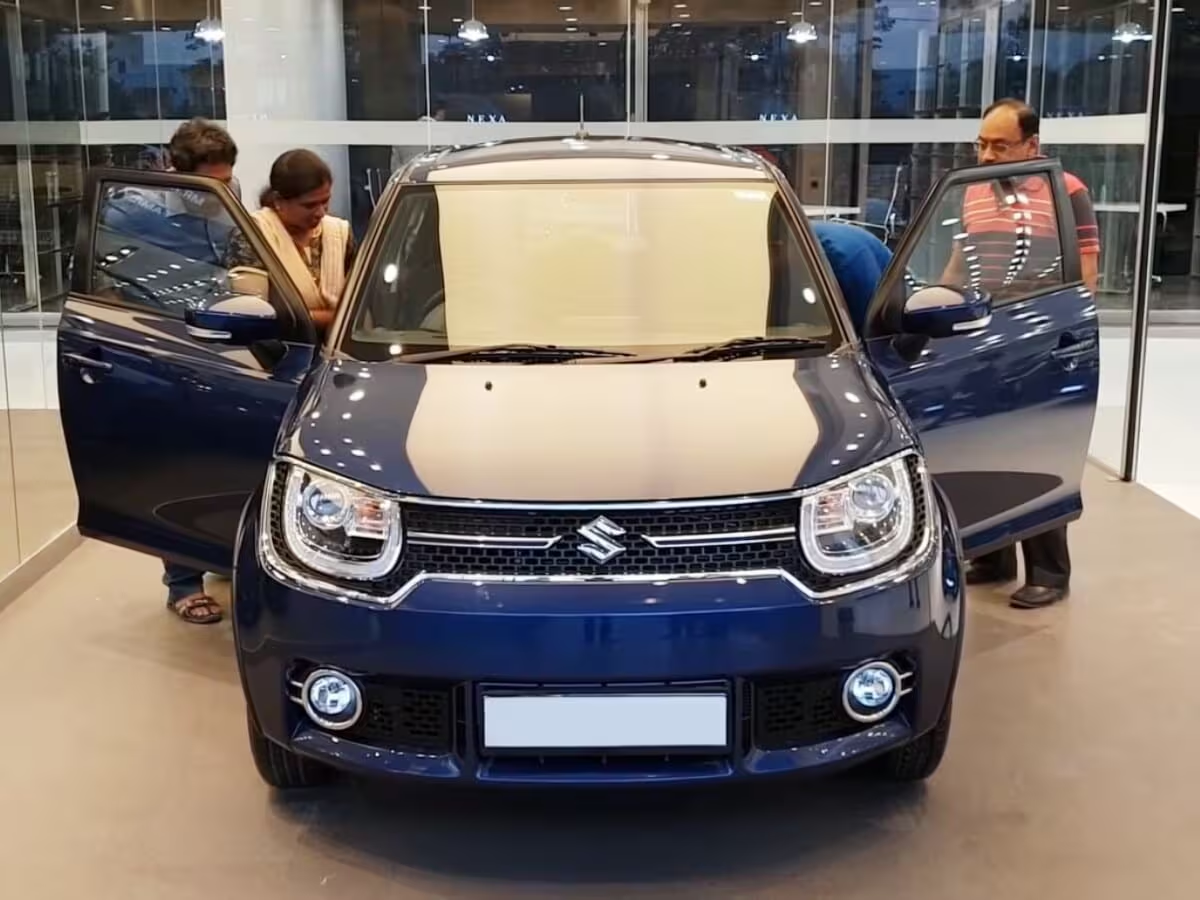
Maruti Suzuki Ignis Discontinued: Here’s Why Its Journey Has Ended
The journey of the Maruti Suzuki Ignis has come to an end for Maruti Suzuki India Limited. Sold through the company’s Nexa dealerships, the Ignis was the entry-level offering in this premium retail chain. However, despite being affordable, it struggled to generate strong sales over the past few years.
Reports suggest that one reason behind discontinuing the Ignis could be the upcoming micro SUV from Maruti, which is expected to compete with popular models like the Tata Punch.
The Ignis was priced between ₹5.35 lakh and ₹7.55 lakh (ex-showroom). Despite its affordable pricing, it offered a relatively premium interior. In its segment, it competed with the Hyundai Grand i10 Nios and Tata Tigor, but lagged significantly behind both in terms of sales.
Although the car is still listed on the official website and bookings are open, production has been discontinued. Sales will continue until existing stock is cleared.
Top Reasons Behind Ignis Discontinuation
1. Continuously Declining Sales
Sales of the Ignis have been steadily declining. Over the past six months (October 2025 to March 2026), numbers dropped from 2,316 units in October 2025 to just 1,250 units in March 2026. Although models like the Maruti Suzuki Jimny and Maruti Suzuki Invicto sold fewer units, they belong to a much higher price segment.
| The three lowest selling cars from the Nexa showroom | ||||||
|---|---|---|---|---|---|---|
| Model | October 25 | November 25 | December 25 | January 26 | February 26 | March 26 |
| Ignis | 2,645 | 2,316 | 1,910 | 1,902 | 1,848 | 1,250 |
| Jimny | 592 | 802 | 757 | 591 | 532 | 656 |
| Invicto | 301 | 410 | 514 | 197 | 143 | 191 |
2. Weak Position in the Segment
The Ignis, positioned as a premium hatchback, faced tough competition. The Grand i10 Nios averages over 5,000 monthly sales, while even the Tata Tiago records over 7,000 units monthly—far ahead of the Ignis.
| Maruti Ignis competes in the segment | ||||||
|---|---|---|---|---|---|---|
| Model | October 25 | November 25 | December 25 | January 26 | February 26 | March 26 |
| Ignis | 2,645 | 2,316 | 1,910 | 1,902 | 1,848 | 1,250 |
| Grand i10 Nios | 5,426 | 4,559 | 4,010 | 7,710 | 5,589 | 5,032 |
| Tiago | 8,850 | 5,988 | 5,826 | 8,349 | 7,040 | 7,119 |
3. Strong Internal Competition
Despite being one of the more affordable cars in Maruti’s lineup, buyers had better alternatives within the brand:
- Maruti Suzuki WagonR starts at ₹4.99 lakh, making it cheaper than Ignis
- Maruti Suzuki Swift starts at ₹5.79 lakh but offers stronger appeal and higher sales
These options made it difficult for the Ignis to stand out.
| Maruti’s other options compared to the Ignis | ||||||
|---|---|---|---|---|---|---|
| Model | October 25 | November 25 | December 25 | January 26 | February 26 | March 26 |
| Ignis | 2,645 | 2,316 | 1,910 | 1,902 | 1,848 | 1,250 |
| Swift | 15,542 | 19,733 | 18,767 | 17,806 | 14,833 | 14,545 |
| WagonR | 18,970 | 14,619 | 14,575 | 15,118 | 14,885 | 17,025 |
4. Lack of Updates and Safety Features
While Maruti has updated many models in recent years—like the Maruti Suzuki Alto K10 with 6 airbags as standard—the Ignis continued with just 2 airbags and basic safety features. With production now stopped, there is no possibility of future updates.
5. No CNG Option
Maruti’s CNG portfolio has been growing rapidly, with strong demand for fuel-efficient models. However, the Ignis never received a factory-fitted CNG option. In contrast, models like the Maruti Suzuki Baleno, WagonR, and Swift offer CNG variants, making them more attractive to buyers.